
Many people believe that once they develop knee osteoarthritis, they will eventually need knee replacement surgery. However, by understanding the structure of the knee correctly and practicing proper lifestyle habits and exercises, it is possible to maintain healthy knees up to age 100 without surgery.
- Understanding the key structures of the knee
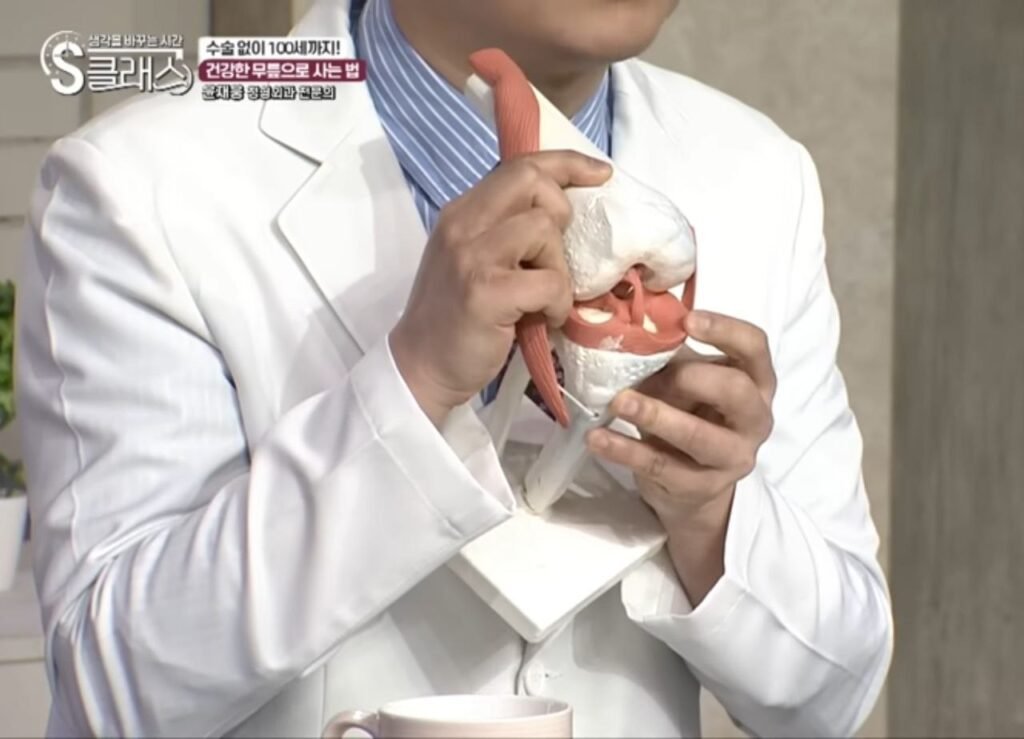
To keep your knees healthy, you must first understand their structure. The knee is made up of bones, ligaments, and two types of cartilage that protect the bones.
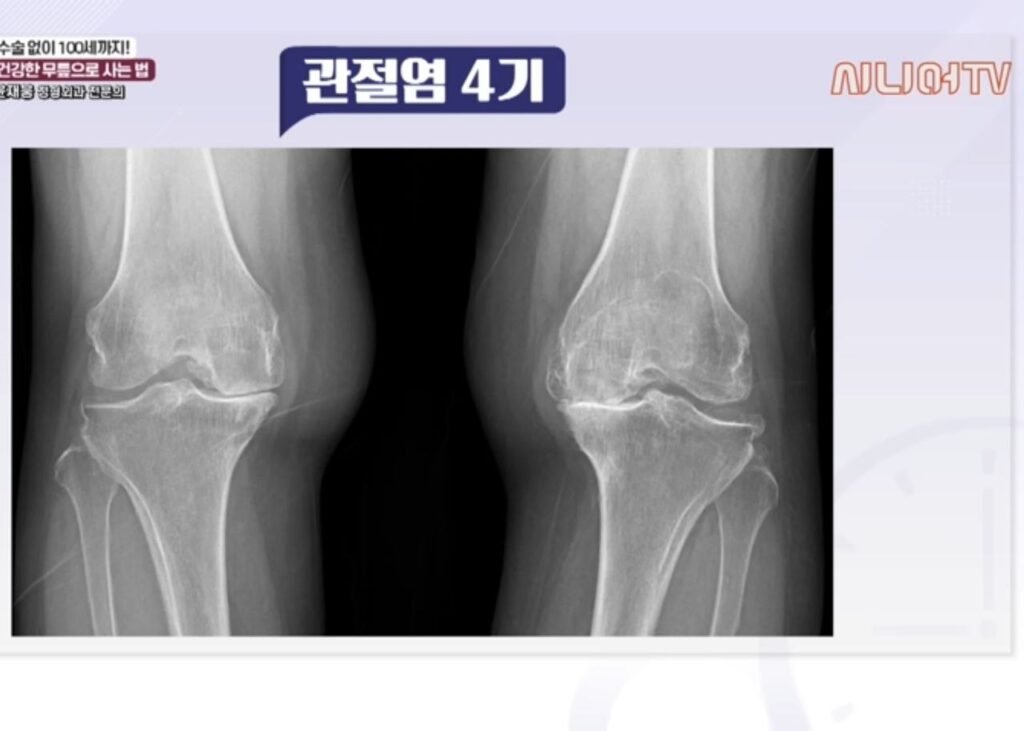
Ligaments (cruciate and collateral ligaments) hold the bones together. The cruciate ligament, in particular, prevents the knee from moving forward and backward excessively. When the cruciate ligament is damaged, the knee becomes unstable and arthritis can progress rapidly, so careful management is essential.
Meniscus (soft cartilage): It is a crescent‑shaped, horseshoe‑like cartilage located between the knee bones. When someone suddenly loses strength and collapses while trying to board a bus, or when the cartilage tears and needs arthroscopic trimming, the structure being referred to is this meniscus.
Articular cartilage: It is a layer of cartilage about 3 mm thick (roughly the thickness of two coins) that covers the ends of the bones. This cartilage acts as a cushion between the bones, and when it wears down, arthritis can progress rapidly.
- Stages of osteoarthritis (KL grade)
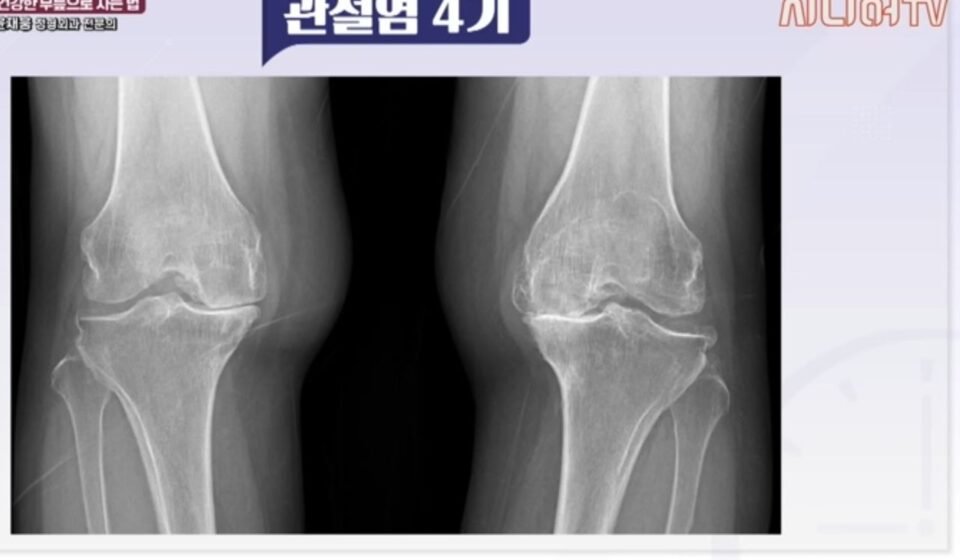
The stages of knee osteoarthritis commonly described in hospitals refer to the KL grade (Kellgren–Lawrence Grade), which is determined based on X‑ray imaging results.
Stage 1: The alignment of the knee bones is normal, with no sharp bone spurs. The cartilage is well preserved without damage, and the space between the bones remains wide and clean.
Stage 2: The joint space begins to narrow slightly.
Stage 3: The joint space becomes noticeably narrower, and as the bones begin to rub against each other, a whitening or “sclerosis” of the bone appears. Bone spurs also become prominent. At this stage, pain is felt even during daily activities, and more active medical treatments such as injections or arthroscopic procedures are often required.
Stage 4: The bones are completely touching each other. The inner part of the joint is mostly worn down, causing the legs to bend into an “O‑shape,” and severe pain persists even at night. This is generally the stage at which knee replacement surgery is considered.
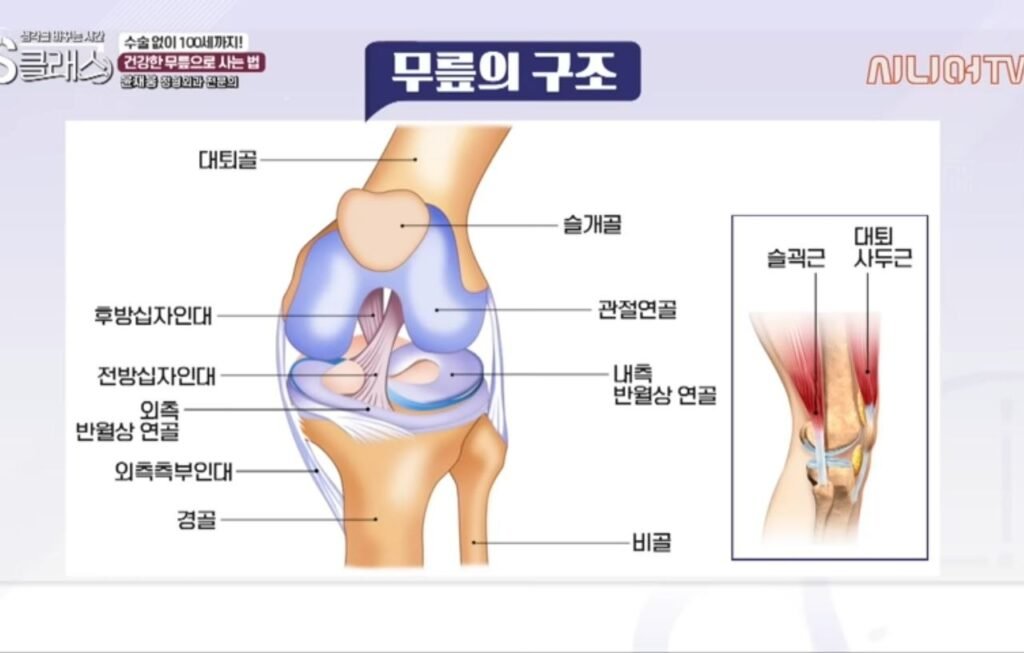
※ Points to consider when deciding on surgery
Even if an X‑ray shows stage 4 with the bones touching, there is no need to rush into surgery if the patient is older (e.g., early to mid‑60s) and does not experience significant pain. The decision for surgery should be based on the patient’s actual pain level and the degree of discomfort in daily life.
- Major causes of knee damage and proper lifestyle habits
When the knee joint is damaged, the area that deteriorates first and most frequently is the soft cartilage at the back of the knee (the posterior part of the meniscus).
Avoid squatting: Deep bending or twisting of the knee puts tremendous pressure on the cartilage at the back of the knee, causing damage. Therefore, household chores that require squatting on the floor should be avoided as much as possible, and standing‑style living using chairs and beds is recommended instead of floor‑based living.
Avoid excessive walking: Many people believe walking is good for the knees and push themselves to walk 10,000–20,000 steps a day despite pain, which can strain the joints. If pain occurs, walking time and distance must be reduced. Activities such as hiking or walking should only be done within a pain‑free and safe range to be beneficial.
- Safe strengthening exercises to protect the knees
To reduce the load on the knee joint, the quadriceps muscles at the front of the thigh need to be strengthened.
Quadriceps strengthening exercise (leg raise): If you feel pain in the front of your knee during squats, you should switch to a different exercise. Sit upright in a chair, straighten your knee, lift your leg, hold briefly, then lower it. This movement strengthens the thigh muscles effectively without bending the knee or putting stress on the joint.
Safe squat: If you cannot give up squats, perform a shallow squat (mini squat) by slightly pushing your hips back while making sure your knees do not move past your toes.
Indoor cycling: Outdoor cycling carries a high risk of falling or unexpected situations that can injure the joints or bones. Therefore, stationary indoor cycling is strongly recommended, as it eliminates unexpected variables and allows you to safely strengthen your lower body.

Gangnam YK Hospital 02-6967-8200 윤재웅 #knee health #orthopedic specialist
https://youtu.be/YfsD_bU-c8U?si=qklQFTR-ig4CzL8O
Discover more from Korea Doctor Interview
Subscribe to get the latest posts sent to your email.