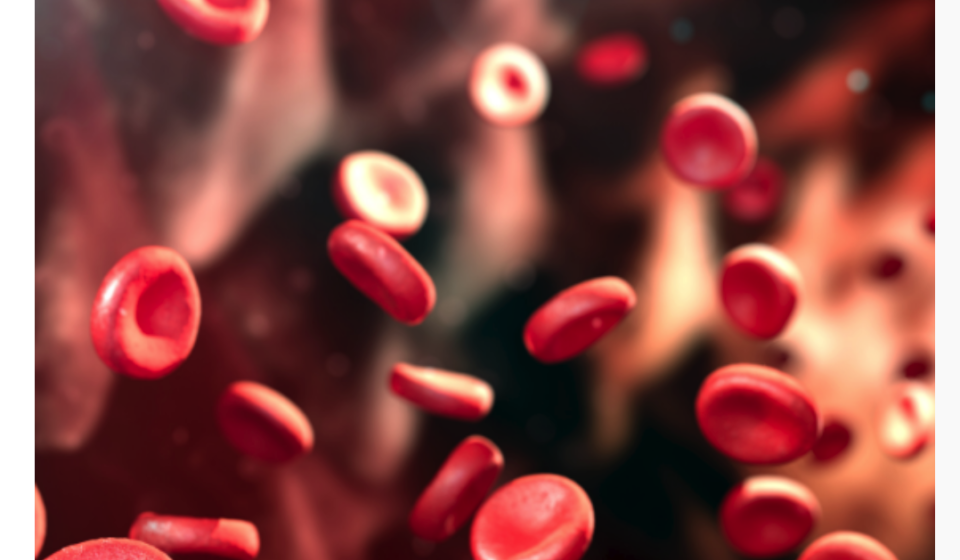

We explored the importance of blood health—an essential part of our overall well‑being—and took a closer look at vascular access for dialysis, a topic many people are not familiar with.
To deliver this topic accurately, we had an in‑depth conversation with Dr. Jeong Minjae, a vascular surgeon at Asan Medical Center in Seoul.
This information is essential not only for patients undergoing hemodialysis but also for their families and caregivers.
🏥 What is general surgery, and what conditions does vascular surgery treat?

Dr. Jeong Minjae first explained the fundamental role of surgery. While internal medicine focuses on medication‑based treatment, surgery involves directly removing or treating lesions using operative techniques.
It involves surgically removing tumors, inflammation, or problematic tissue, and then proceeding with diagnosis and treatment based on the results.
As medicine has advanced, surgical specialties have become increasingly subdivided into fields such as breast surgery, thyroid surgery, upper gastrointestinal surgery, colorectal surgery, hepatobiliary and pancreatic surgery, and transplant surgery. Among them, vascular surgery focuses on treating vascular diseases throughout the body, excluding the chest and cerebral vessels. It addresses problems caused by narrowed or blocked blood vessels and helps maintain normal blood flow.
💉 What is vascular access for dialysis?
The term “vascular access for dialysis” may be unfamiliar to many people.
However, for patients with chronic kidney failure, it is a device as vital as life itself. When the kidneys can no longer function properly, renal replacement therapy—such as…
- Kidney transplantation
- Peritoneal dialysis
- hemodialysis
Patients must choose one of these three options. Among them, hemodialysis is the treatment most commonly selected.
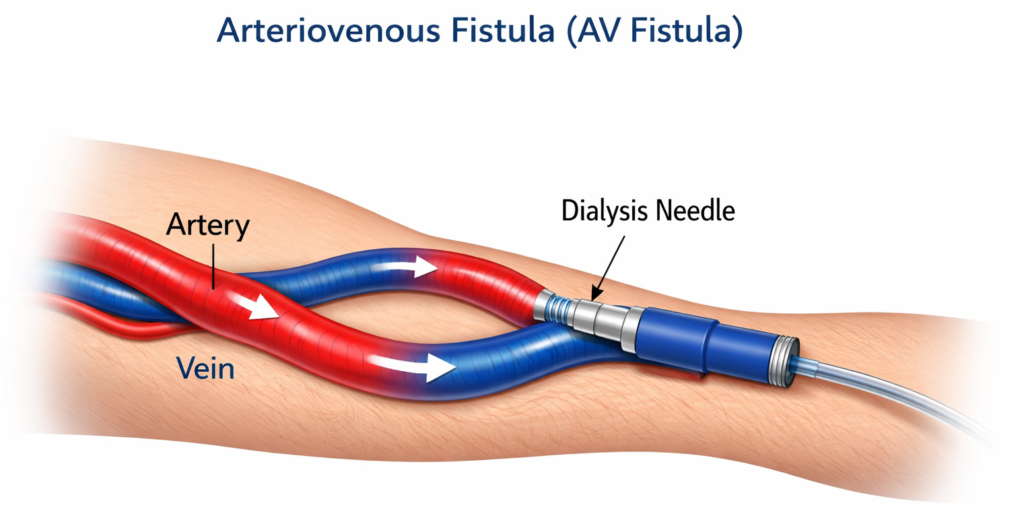
Hemodialysis is a process in which blood is taken out of the body, cleansed of waste products, and then returned. The pathway through which the blood flows in and out is called the vascular access. This access is usually created in the patient’s non‑dominant arm. There are two main methods.
1) Using the patient’s own blood vessels (arteriovenous fistula, AVF)
It is a method in which an artery and a vein are directly connected to increase blood flow. It is the preferred option for patients whose blood vessels are strong and of sufficient diameter.
2) Inserting an artificial blood vessel (graft)
It is used when the patient’s own blood vessels are weak or too narrow.
An artificial graft is used to connect an artery and a vein, allowing hemodialysis to be performed.
The vascular access created in this way
It is an essential pathway that allows blood to circulate rapidly and enables smooth dialysis.
Director Jeong Min-jae described the dialysis vascular access as a “lifeline.” That is how critically important it is for patients undergoing dialysis.
Two conditions are required for the vascular access to function properly.
- A vessel diameter wide enough to allow insertion of the dialysis needle
- A blood flow rate sufficient to filter waste products
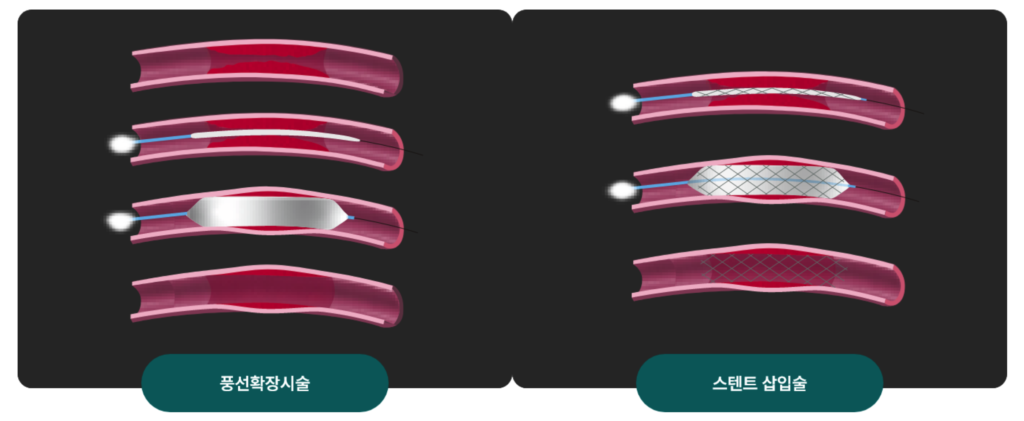
A normal vein has a blood flow of about 5 cc per minute. However, a dialysis vascular access carries blood at a rapid rate of 600 to 2000 cc per minute. When such strong blood flow continues, intimal hyperplasia (thickening of the vessel wall) occurs inside the vessel. Over time, the vessel gradually narrows and eventually a thrombus (blood clot) forms.
When a blood clot forms
- Dialysis becomes difficult
- Emergency thrombectomy becomes necessary
- In severe cases, it may lead to a situation where a new dialysis vascular access must be created.
For this reason, managing the dialysis vascular access is the most important part of treatment for dialysis patients.
🔥 What patients can do to prevent blood clots, something many patients…
- Warm compress
- Infrared irradiator / Infrared lamp
…use these methods to help maintain blood flow. Although such approaches can be helpful, the most important thing is that patients accurately understand the condition of their own vessels. Dialysis vascular access naturally becomes narrower over time. Therefore, patients should…
- Where my blood vessel is becoming narrowed
- Whether there is a possibility of a blood clot forming
- What problems may arise in the future
Knowing this information allows early intervention. Vascular surgery specialists play a key role in supporting this aspect of care. Through regular examinations and monitoring, they assess the condition of the vessels and provide necessary treatment at the appropriate time, helping patients use their dialysis access for as long as possible.
❓ FAQ — Five Frequently Asked Questions
1) Which arm is best for creating a dialysis vascular access?
In general, it is recommended to create it in the non‑dominant arm (the arm used less).
2) How long can a dialysis vascular access be used?
Although it varies depending on how well it is managed,
With regular check‑ups and appropriate treatment, it can be used for many years.
3) If the dialysis vascular access becomes blocked, is it an emergency?
Yes. If it becomes blocked by a blood clot, immediate treatment is required, and delaying it may result in losing the vessel.
4) Do warm compresses or infrared therapy help?
It can help improve blood flow, but
The fundamental preventive measure is regular monitoring of the vascular condition.
5) Is it possible to detect narrowing of the dialysis vascular access in advance?
It can be detected through signs such as reduced blood flow, arm swelling, or pressure changes during dialysis, and
Regular ultrasound examinations are the most accurate method.

Chronic kidney failure https://share.google/iQAiIxcsYjBwCpDTT
Discover more from Korea Doctor Interview
Subscribe to get the latest posts sent to your email.