Benign Prostatic Hyperplasia, Expert Interview on Accurate Diagnosis and Treatment —

Benign Prostatic Hyperplasia (BPH) is,
It is a condition in which the prostate tissue grows abnormally and increases in size. Because the prostate surrounds the urethra just below the bladder, enlargement of the prostate narrows the urethra and obstructs the flow of urine.
As a result, various symptoms such as decreased urine flow, a feeling of incomplete emptying, and nighttime urination may occur. We conducted an interview with Dr. Jongpil Lee of LNS Urology Clinic.

“Benign prostatic hyperplasia is not simply an enlargement of the prostate; the enlarged prostate compresses the urethra and affects overall urinary function.”
The reasons benign prostatic hyperplasia occurs are,
According to a comprehensive review of various studies, it is known that multiple factors act in combination.
✔ Aging
Prostate cell proliferation is promoted as the cells are exposed to oxidative stress.
✔ Changes in male hormones
Testosterone is converted into DHT, which stimulates the proliferation of prostate cells.
✔ Genetic factors
A family history increases the likelihood of developing the condition.
✔ Metabolic syndrome
It is strongly associated with obesity, hypertension, diabetes, and hyperlipidemia.
✔ Lifestyle habits
Lack of exercise, a high‑fat diet, and excessive meat consumption can all contribute to the condition.
Benign prostatic hyperplasia presents with various urinary symptoms. Nocturia, in particular, is often the first sign many men notice.
🔹 Symptoms related to urinary flow
- Weak urine stream
- Intermittent urine flow
- Prolonged urination time
- A feeling of incomplete or unsatisfying urination
🔹 Bladder irritation symptoms
- Frequent urination
- nocturia
- Sudden urge to urinate
- Sensation of incomplete bladder emptying
🔹 Symptoms that appear when the condition worsens
- Urinary retention (emergency)
- Urinary tract infection (UTI)
- Hematuria
- Decreased bladder function
How is benign prostatic hyperplasia (BPH) diagnosed?
For an accurate diagnosis, the following tests are performed step by step.
✔ Medical interview and urination questionnaire (IPSS)
The severity of symptoms and the level of daily discomfort are assessed.
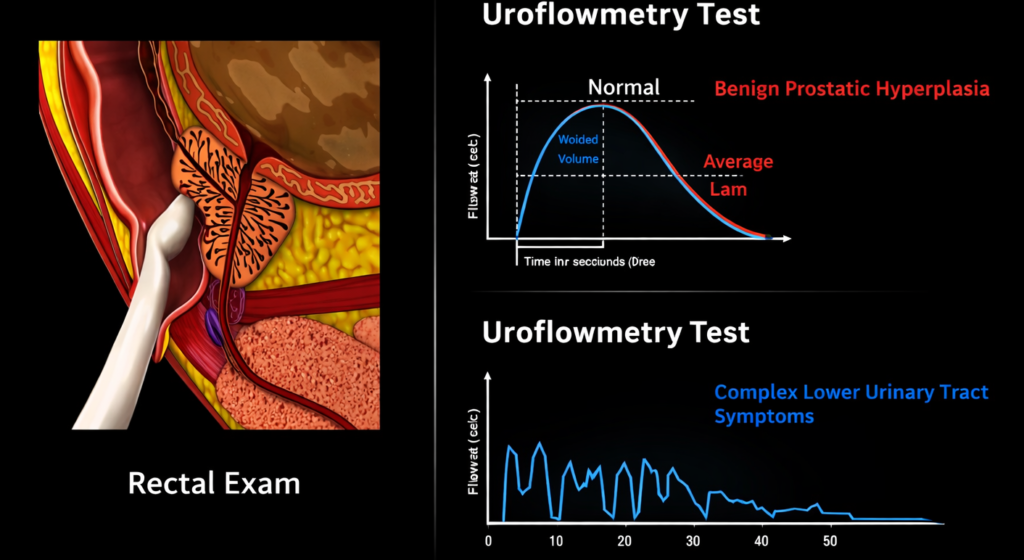
✔ Digital rectal examination (DRE)
The prostate is examined for its size, firmness, and the presence of any nodules.
✔ PSA blood test
It is essential for distinguishing benign conditions from prostate cancer.
✔ Prostate and bladder ultrasound
The prostate size, residual urine volume, and bladder wall thickness are evaluated.
✔ Uroflowmetry (urine flow test)
The urine flow rate is measured to determine the degree of urethral obstruction.
Treatment for benign prostatic hyperplasia generally progresses from medication to surgical intervention.
✔ Medication therapy
- Urethral muscle relaxant
- Bladder irritation reliever
- Hormone inhibitor
Most patients experience significant improvement with medication alone.
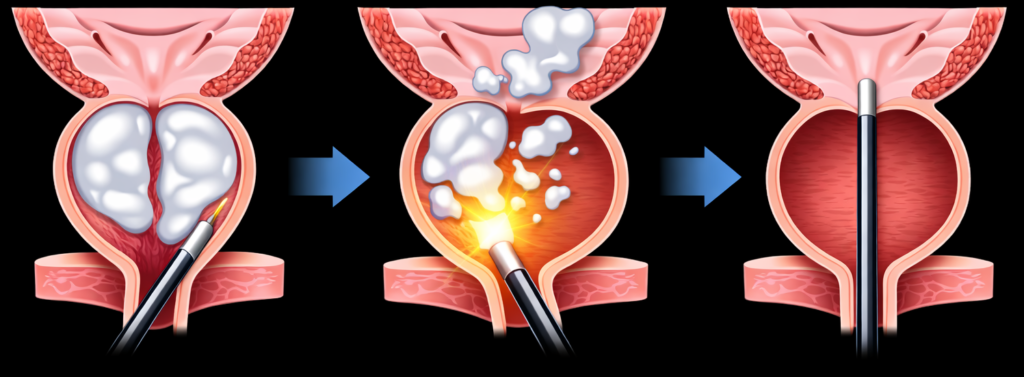
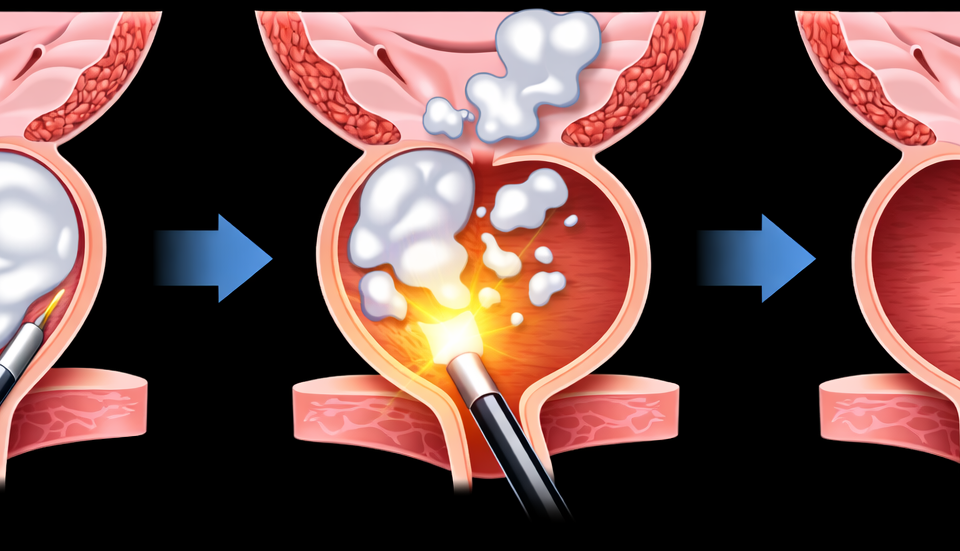
HoLEP surgery (Holmium Laser Enucleation of the Prostate)
🟦 Comparison of TURP, HoLEP, and ligation procedures
🔹 TURP (Transurethral Resection of the Prostate)
- Traditional surgery
- Removal of prostate tissue using an endoscope
- Highly effective
🔹 HoLEP (Holmium Laser Enucleation of the Prostate)
- Removal of internal prostate tissue using a laser
- Less bleeding and faster recovery
- Low recurrence rate
🔹 Ligation procedure (urinary tract expansion procedure)
- A non‑resection procedure that widens the urethra using sutures
- Suitable for elderly patients
- Fast recovery

Most surgeries are performed under spinal or general anesthesia, so there is no pain during the procedure.
There may be some discomfort while the urinary catheter is kept in place for 2–3 days after surgery, but it is usually temporary and improves quickly. Although there is no perfect way to prevent it, the following lifestyle habits may help.
✔ Eating habits
- Reduce fatty foods
- Reduce excessive meat consumption
- Eat plenty of vegetables and fruits
- Consume antioxidant foods such as tomatoes and garlic
✔ Lifestyle habits
- Regular exercise
- Reduce excessive drinking and smoking
- Reduce the habit of sitting for long periods
- Weight management
- Reduce caffeine and carbonated drinks
Benign prostatic hyperplasia is not simply a natural part of aging; if left untreated, it can significantly reduce quality of life by causing bladder dysfunction, urinary retention, and recurrent urinary tract infections. However, with early diagnosis and appropriate treatment, most symptoms can be effectively managed. In recent years, treatment options have expanded to include medications, laser therapy, and non‑resection procedures, allowing for personalized treatment tailored to each patient’s condition.
Benign prostatic hyperplasia is not a condition to be ashamed of or to hide. If you have symptoms, consulting a specialist before it becomes too late is the most important step.
If you experience nightly urinary discomfort, a feeling of incomplete emptying, or ongoing stress in your daily life, don’t struggle with it alone — consider consulting a medical specialist. Wishing you healthy days and peaceful nights.
LNS Urology Clinic Website http://www.lnsclinic.co.kr
Discover more from Korea Doctor Interview
Subscribe to get the latest posts sent to your email.