Why Does Eye Aging Accelerate in Your 50s and 60s? Lower and Upper Eyelid Surgery Explained

We met with Dr. Park Byungchan of Made Young Plastic Surgery to discuss the eye‑aging concerns most commonly reported by patients in their 50s and 60s. The concerns that repeatedly come up during consultations include…
Patients often say things like “My eye shape has changed” or “My eyes look droopy.” Dr. Park explained anatomically why the eye area ages earlier than other parts of the face and how it can be corrected to restore a natural, youthful appearance.
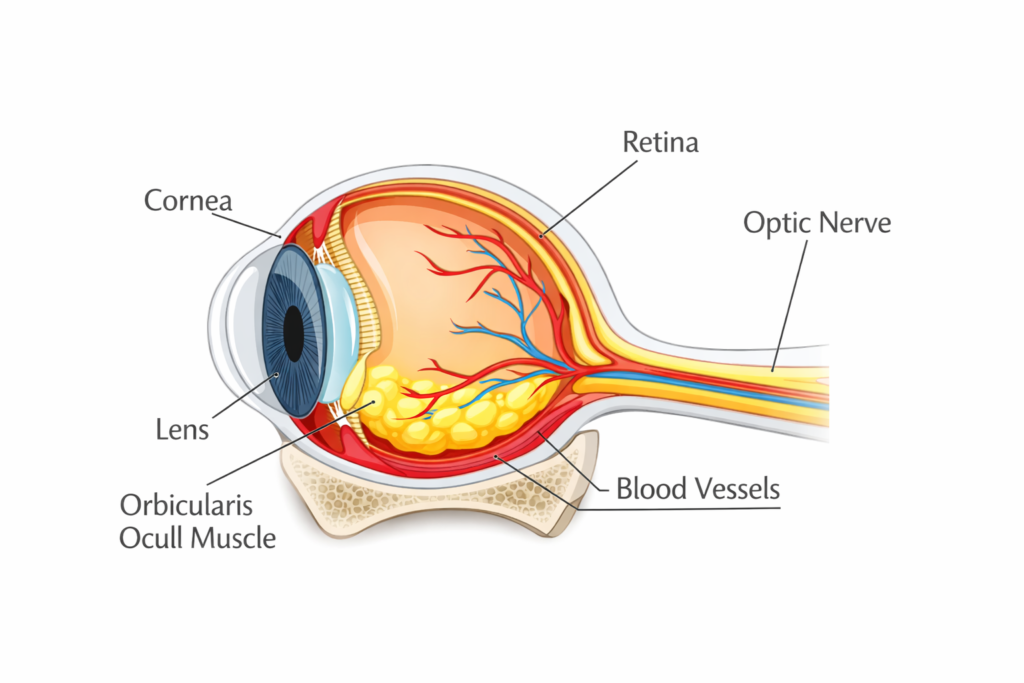
He explained that the reason the eye area is vulnerable to aging lies in its structural weaknesses.
• The skin and muscles around the eyes are much thinner than those in other areas of the face.
• It is vulnerable to external irritation and repetitive movement.
• The supporting structures on both sides of the eyeball begin to sag like a hammock.
Decades of repetitive blinking gradually loosen these supporting structures, leading to changes such as altered eyelid folds, a hollowed appearance of the eyes, and protrusion of under‑eye fat.
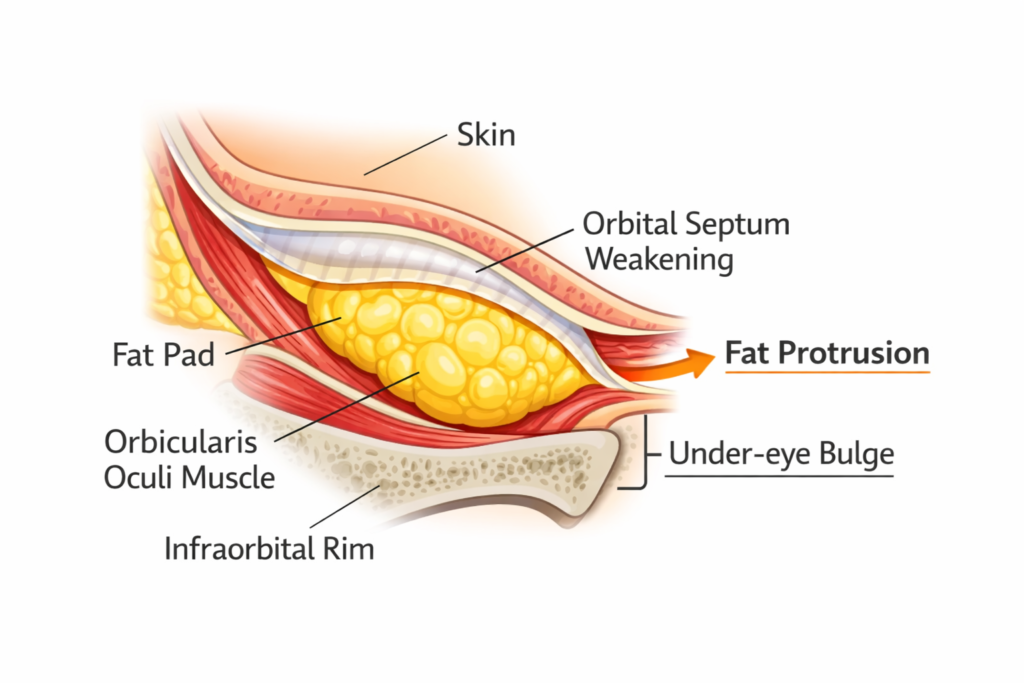
– Under‑eye aging caused by the weakening of the orbital septum
The orbital septum, which surrounds and supports the under‑eye fat, functions like a small “pouch.” When this pouch weakens, the fat begins to push forward, and the surrounding skin, muscles, and fascia lose elasticity at the same time, leading to the typical signs of under‑eye aging.
There is no need to worry. By accurately understanding and correcting these anatomical changes, it is possible to look at least ten years younger. One of the most effective solutions is lower eyelid surgery.
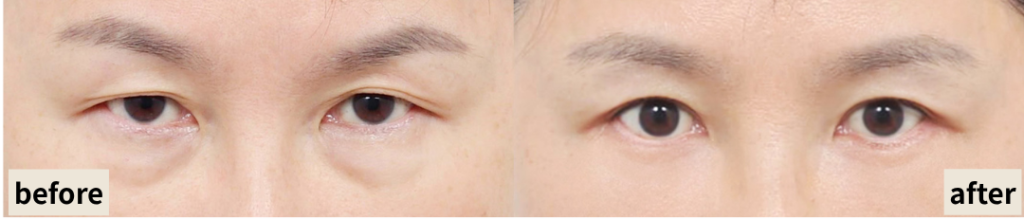
-Lower eyelid surgery is not simply about removing fat.
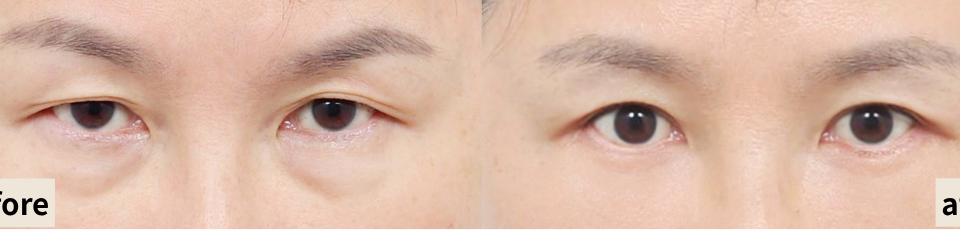
In people in their 50s and 60s, the under‑eye area is not just puffy with fat; the area beneath it often appears hollow and shadowed. Therefore, simple fat removal alone can never resolve the issue. Lower eyelid surgery requires a combination of corrective techniques such as the following.
• Repositioning the protruding fat into the hollowed areas
• Strengthening the loosened orbital septum
• Re-fixation of the sagging pretarsal orbicularis muscle (the “aegyo-sal” muscle)
• Excision of the sagging skin
Through this process, it is possible to create a natural contour and restore a bright, refreshed under‑eye appearance.
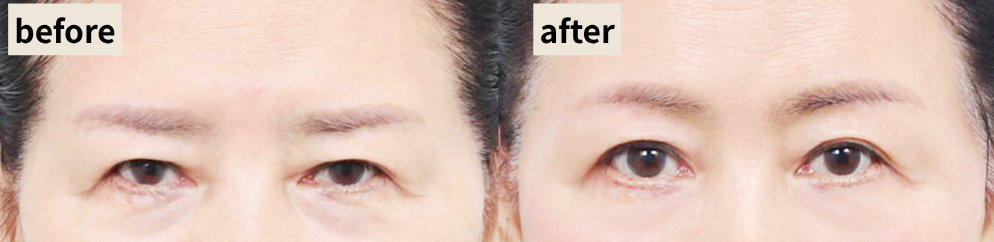
-Upper‑eye aging: eyebrow drooping and upper eyelid changes
Aging does not occur only beneath the eyes. As we get older, the forehead muscles and the SMAS fascia begin to sag under the influence of gravity, causing the eyebrows to descend. When the eyebrows drop, the upper eyelid skin is pushed downward, making the eyes appear smaller and giving a heavy, tired impression. In response, people unconsciously lift their eyes by overusing the forehead muscles, which leads to deeper forehead wrinkles and creates a repeating cycle.
The three surgical methods for correcting aging around the eyes are:
✔ 1) Forehead lift
It is the most fundamental solution when drooping eyebrows are the cause. By using an endoscope to release the sagging forehead muscles and SMAS fascia and then securing them firmly, the descended eyebrows return to their proper position. This allows the eyes to open naturally without having to lift them forcefully, while also improving frown lines and forehead wrinkles.
✔ 2) Sub‑brow lift
It is suitable when the eyebrow position is normal but the upper eyelid skin alone has sagged. Only the loose skin along the line just beneath the eyebrow is precisely excised, and the fascia is securely tightened. Since the original eye shape is not altered, changes in appearance are minimal, and the scar is naturally hidden under the eyebrow.
✔ 3) Upper eyelid surgery (upper blepharoplasty)
The upper eyelid is an area that ages very quickly. The skin becomes loose, the fat and muscles shrink, and the strength used to lift the eyelid gradually weakens.
Upper eyelid surgery (upper blepharoplasty) is
• Skin excision
• Double‑eyelid fixation
• Fat repositioning
• Strengthening the levator muscle is performed together, improving the field of vision and creating a clearer, more defined eye shape.
Aging around the eyes is a process in which the entire structure changes. Because the skin, muscles, fat, and fascia around the eyes all change simultaneously, it is essential to choose a customized procedure that fits your needs rather than simply undergoing the same surgery others are getting.
Aging around the eyes is not merely a cosmetic issue but a structural change, making accurate diagnosis and an anatomically based approach essential.
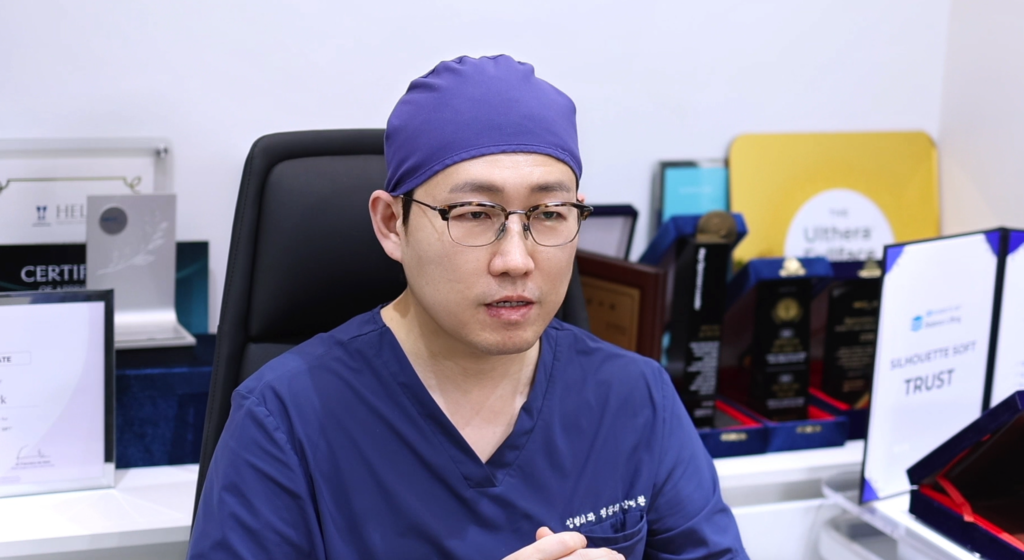
(Made Young Plastic Surgery Clinic, Director Park Byung‑chan)
📌 Frequently asked key questions
Q1. Why does the area around the eyes age the fastest?
A. The area around the eyes has thin skin and muscles, and its supporting structures are weak, making it prone to sagging from repeated movements.
Q2. What causes the under‑eye area to become puffy?
A. The main cause is the weakening of the orbital septum, which allows the fat to protrude forward.
Q3. How can under‑eye aging be treated in people in their 50s and 60s?
A. A combined correction that includes fat repositioning, orbital septum reinforcement, and excision of loose skin is the most effective approach.
Q4. Why does drooping of the upper eyelids occur?
A. As the forehead and fascia sag, the eyebrows descend, causing the eyelid skin to cover the eyes and create a heavy, tired appearance.
Q5. Which surgical procedure should be chosen?
A. It depends on the cause.
- Forehead sagging → Forehead lift surgery
- Only the eyelid skin is sagging → Sub-brow lift surgery
- Aging of the upper eyelid itself → upper eyelid surgery
Made Young Plastic Surgery Clinic website https://midlife.made-young.com
Discover more from Korea Doctor Interview
Subscribe to get the latest posts sent to your email.