The Deep Connection Between Periodontal Disease and Systemic Health|All About Periodontal Disease

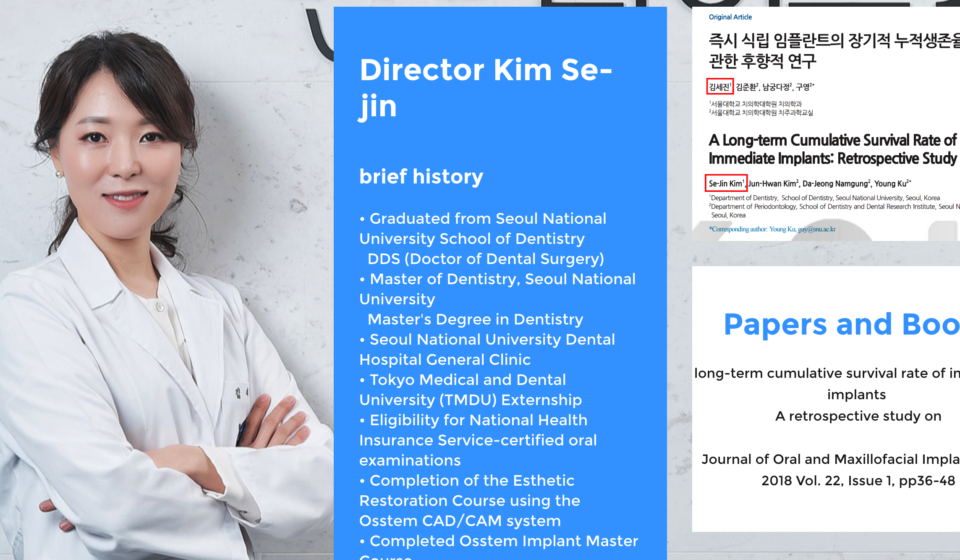
⭐ This interview was conducted with Dr. Sejin Kim of Gildong Life Dental Clinic.
This topic is periodontal disease, something many people are curious about but often struggle to find accurate information on.
Many people still do not realize that periodontal disease is not just a gum problem but is deeply connected to systemic diseases. As we enter an aging society, periodontal disease has become an important condition that affects overall health, not just an oral disease.
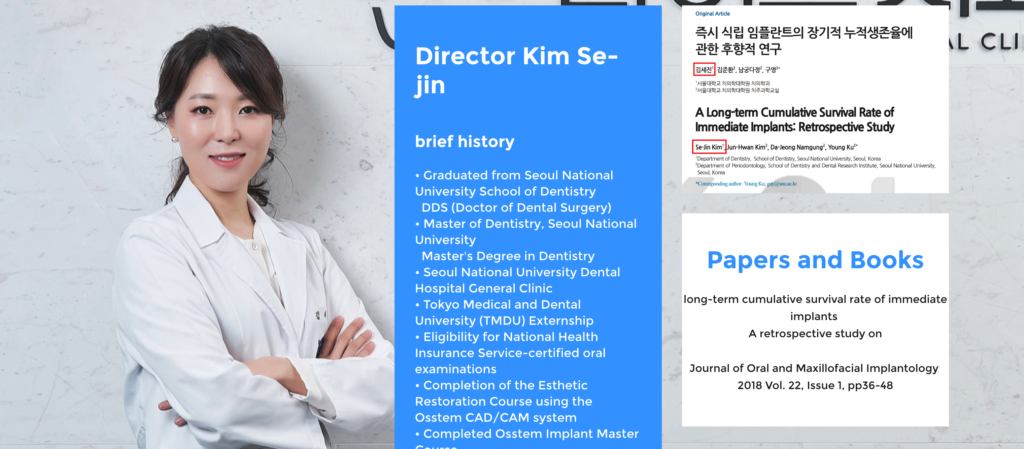
Director Kim Se-jin explained that, in response to the question “Are hypertension, diabetes, and periodontitis related?”, this is not mere speculation but a conclusion supported by numerous studies proving the causal relationship between periodontal disease and systemic diseases.
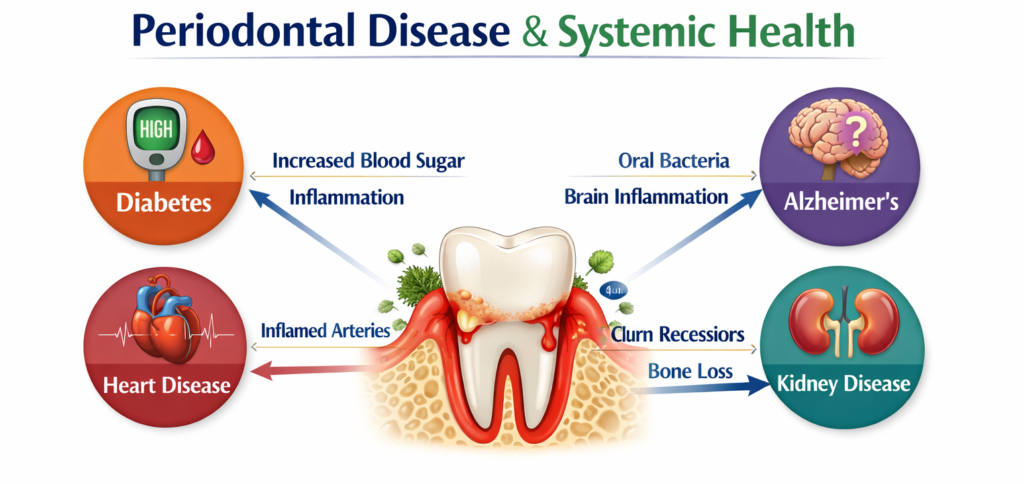
In fact, numerous studies continue to report that periodontal disease is associated with hypertension, diabetes, kidney disease, cerebrovascular disease, cardiovascular disease, and more recently, even dementia.
Even the dental professional journal Chiui Shinbo also…
“Patients with dementia who have periodontal disease have a two‑fold increase in mortality risk”
“Mortality rates are twice as high among oral‑frailty patients in an aging society”
These kinds of reports continue to appear repeatedly. As the world has already entered a super‑aged society, the importance of managing periodontal disease will inevitably grow even further.
🔬 Scientific Reasons Why Periodontal Disease Is Linked to Systemic Diseases
Periodontal disease is not merely a condition that causes swollen or bleeding gums, but a chronic inflammatory disease that triggers systemic inflammatory responses.
When periodontitis occurs, pro‑inflammatory cytokines (IL‑1β, TNF‑α, etc.) increase within the gums, and these substances spread throughout the body via the bloodstream, elevating systemic inflammatory markers.
This type of chronic inflammation interferes with blood sugar control, impairs vascular endothelial function, and disrupts immune system balance, ultimately contributing to the worsening of various systemic diseases.
In other words, periodontal disease is not confined to the oral cavity but is a condition that affects overall systemic health.
🧠 The Link Between Periodontal Disease and Dementia
Recent studies have shown that P. gingivalis, a major bacterium responsible for periodontitis, can travel through the bloodstream to the brain and trigger inflammation,
Studies have reported that it may promote the formation of amyloid plaques, which are known to be a major cause of dementia.
For this reason, periodontal disease is not merely a gum condition but
there is a growing trend to view it as a condition directly linked to brain health.
🦷 Diabetes and Periodontal Disease — Why They Worsen Each Other
As blood glucose levels rise in patients with diabetes, inflammatory responses increase within the gum tissues, which in turn raises the likelihood of developing periodontal disease.
In addition, patients with diabetes have weakened immunity and are more susceptible to infections, causing periodontitis to progress more rapidly.
According to research,
- research shows that patients with diabetes have a 2.6‑fold higher risk of developing periodontal disease
- the risk of alveolar bone loss increases by more than 3.4 times
When periodontal disease persists, fasting blood glucose becomes harder to control, creating a vicious cycle that further worsens diabetes. In other words, periodontal disease and diabetes have a bidirectional causal relationship in which each condition aggravates the other.
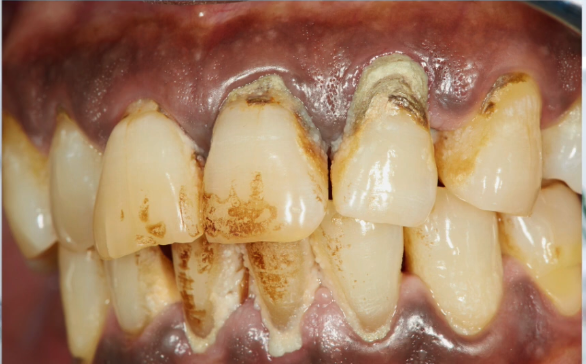
🦷 Stages of Periodontal Disease and Treatment Methods
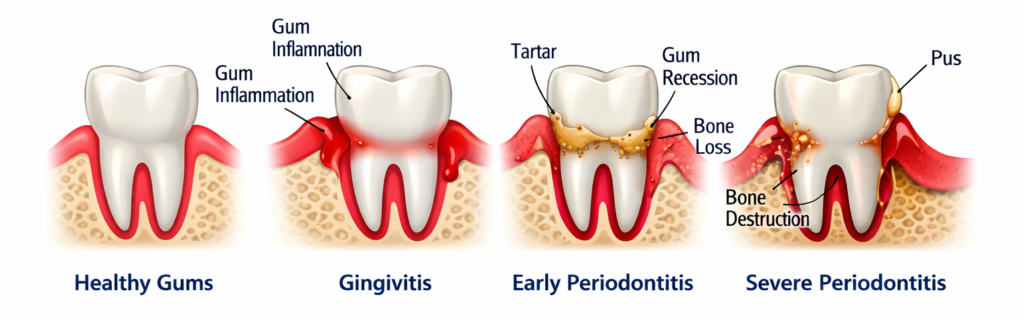
Periodontal disease progresses gradually through the following stages.
- Gingivitis – Gum swelling and bleeding
- Early periodontitis – Increased space between the gums and teeth
- Moderate periodontitis – Onset of alveolar bone resorption
- Severe periodontitis – Tooth mobility and possible extraction
Early detection is crucial because the treatment varies at each stage.
🧼 Daily Oral Care Routine (Periodontal Disease Prevention Routine)
Morning
- Brush for at least 3 minutes with a soft toothbrush
- Use a tongue cleaner
- Use a mild oral rinse
Noon / Lunchtime
- Rinse with mouthwash or water after meals
- Use an interdental brush
Evening
- Floss → Brushing → Interdental brush → Fluoride toothpaste
- Use a moisturizing oral spray when needed
Weekly
- Use an electric toothbrush 1–2 times
- Check the condition of your tongue
Quarterly
- Dental visit and scaling
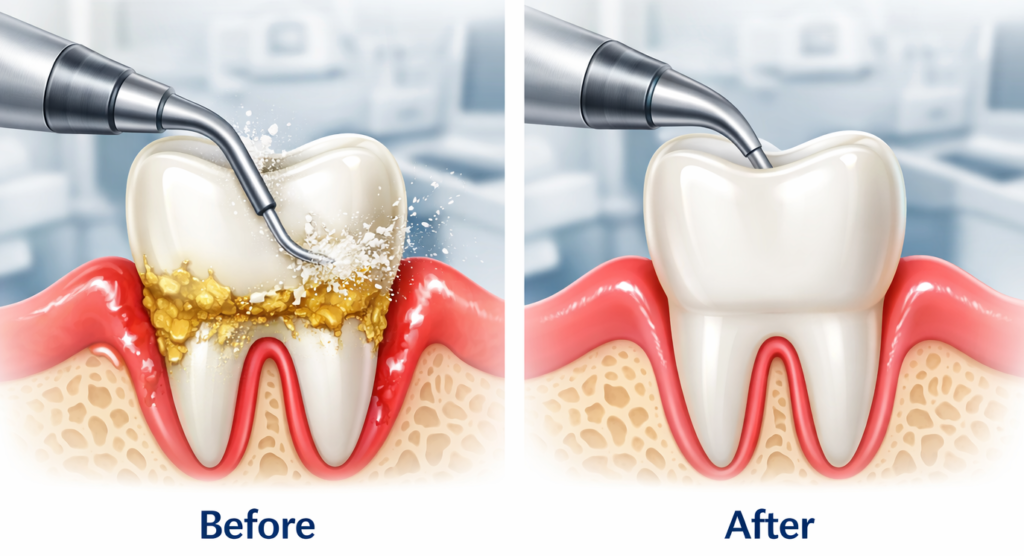
🪥 Scaling vs Water scaling
Scaling is the most essential basic treatment for the prevention and management of periodontal disease.
Scaling can remove even the hard tartar deep under the gums, making it highly effective in addressing the root cause of periodontal disease.
There may be some discomfort, but it is an essential procedure for preventing and treating periodontal disease.
On the other hand, water scaling uses water to minimize irritation, so it has the advantage of causing almost no pain, but…
Because its tartar‑removal ability is insufficient, it is difficult for it to fulfill the essential purpose of preventing and treating periodontal disease.
In other words, water scaling can provide comfort, but it is insufficient for properly managing periodontal disease.
Director Sejin Kim emphasized that “even if scaling causes some discomfort, properly removing tartar is the most important,” and explained that when necessary, treatment is performed using methods such as topical anesthetic gargles to reduce pain.
🧩 The relationship between aging and periodontal disease
As we age, saliva production decreases, and the viscosity and composition of saliva also change.
Saliva plays an important role in washing away oral bacteria and neutralizing acidity, so when saliva decreases, the rates of periodontal disease and cavities inevitably rise sharply.
When factors such as medication use, hormonal changes, and weakened immunity overlap, oral health can deteriorate even more rapidly.
🦷 Why Life Dental Clinic is called ‘Life’
Gildong Life Dental Clinic aims to be a dental clinic that accompanies patients throughout their entire lives, just as its name suggests.
We carefully explain the necessary oral‑care points based on each patient’s oral condition, guide them on how to properly use toothbrushes, interdental brushes, and dental floss suited to their needs, and provide personalized oral‑care solutions.

Life Dental Clinic website https://lifedental.imweb.me/home
❓ F&A (Frequently Asked Questions)
1. Can periodontal disease cause systemic diseases
Yes. Periodontal disease can increase systemic inflammation and worsen various systemic conditions.
2. Why is the risk of periodontal disease higher in diabetic patients
Elevated blood sugar increases inflammatory responses and weakens immunity, making periodontal disease more likely to occur.
3. Can periodontal disease be completely cured
It can be restored in the early stages, but in severe stages, the focus shifts to management.
4. How often should I get scaling
Generally, once every six months is recommended, but for patients with periodontal disease or diabetes, once every three months is advised.
5. Does water scaling help prevent periodontal disease
It is not suitable for preventing periodontal disease because it lacks sufficient tartar‑removal capability.
6. Is periodontal disease also related to dementia
The bacterium P. gingivalis can induce brain inflammation, and its association has been reported.
7. If periodontal disease is severe, is tooth extraction necessary
There are various treatment options depending on the condition, and early treatment is the most important.
8. Why does periodontal disease worsen with age
Multiple factors are involved, including reduced saliva production, weakened immunity, and medication use.
9. Do I really need to use interdental brushes and dental floss
Yes. They are essential for preventing periodontal disease.
10. Does periodontal disease make blood sugar control more difficult
Yes. If periodontitis persists, fasting blood sugar becomes harder to control, which can worsen diabetes.
Discover more from Korea Doctor Interview
Subscribe to get the latest posts sent to your email.