What to Do First When an Ovarian Cyst Is Found|Benign vs. Malignant, Tests, and Treatment

Key Insights on Ovarian Cyst Diagnosis from Dr. Choi Dong-seok of Gangnam Choisang Women’s Clinic
The moment many women first hear the word “ovarian cyst,” their hearts often sink.
Hearing phrases like “there’s a mass” or “a cyst is visible” alone can cause overwhelming anxiety, and it’s natural to worry whether it might turn into cancer or become malignant over time.
Dr. Choi Dong-seok of Gangnam Choisang Women’s Clinic says that the question he hears most often in the consultation room is, “Can an ovarian cyst turn into cancer over time?”

(Director Choi Dong-seok, Gangnam Choisang Women’s Clinic)
However, contrary to what many people assume, an ovarian cyst is already determined to be either benign or malignant from the moment it forms.
It is important to understand first that benign ovarian cysts almost never turn malignant over time.
However, when an ovarian cyst is first discovered, we cannot know with certainty whether it is benign or malignant, so a diagnostic process is necessary to determine its nature.
🔸 Over 99% of Ovarian Cysts Are Benign — Why You Don’t Need to Worry Too Much
Although anyone can feel anxious when an ovarian cyst is found, statistically, more than 99% of ovarian masses are benign.
In other words, the likelihood of it being malignant is less than 1%.
•••••••••••••••••••••••••••••••••••
Nevertheless, accurate diagnosis is essential because only by clearly identifying the nature of the mass can the appropriate treatment direction be determined.
Because a definitive diagnosis requires removing part or all of the ovarian tissue for biopsy, it is not easy to decide on surgery from the very beginning.
This is why detailed and precise examinations play such an important role.
🔸 What to Do First When an Ovarian Cyst Is Found: Detailed Examinations to Determine the Exact Nature of the Cyst
In most cases, ovarian cysts are first discovered incidentally during a routine health check-up ultrasound or a gynecological examination. When the doctor determines that a closer look is needed, the following detailed evaluations are typically performed.
📍 1. Ovarian Tumor Marker Test (Blood Test)
The levels of ovarian cancer–related tumor markers are checked to assess the risk associated with the cyst.
📍 2. MRI Scan
MRI allows for a much more detailed assessment than ultrasound, enabling precise evaluation of the cyst’s internal structure, wall thickness, blood flow, and the presence of solid components. This makes it possible to predict the likelihood of benign or malignant disease with very high accuracy.
Although not absolutely 100%, these two examinations together allow us to determine the nature of an ovarian cyst with accuracy that is very close to 100%.
Based on the results, conclusions such as “likely benign” or “cannot rule out malignancy” are made, and the treatment plan is determined accordingly.
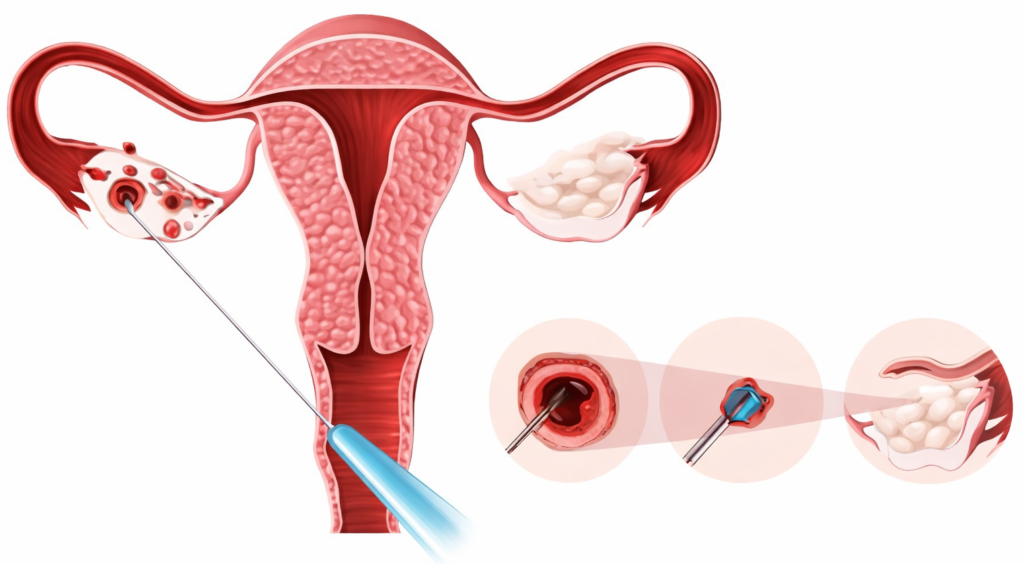
**If the ovarian cyst is benign?
Observation · Sclerotherapy · Surgery options available**
Benign ovarian cysts usually do not require urgent treatment, and there are several options depending on their size and shape.
1. Observation (Follow-up)
- Small in size
- Appears to be a functional cyst
- When it is highly likely to disappear naturally
Regular ultrasound monitoring alone is sufficient.
2. Ovarian cyst sclerotherapy (non‑surgical treatment)
While observing with ultrasound, the fluid inside the cyst is removed using a special needle, and then
It is a method in which a sclerosing agent, such as alcohol, is injected to shrink the cyst.
📌 Advantages
- No surgery required
- Maximizes preservation of normal ovarian tissue
- Especially beneficial for women of reproductive age
- Reduced risk of early menopause
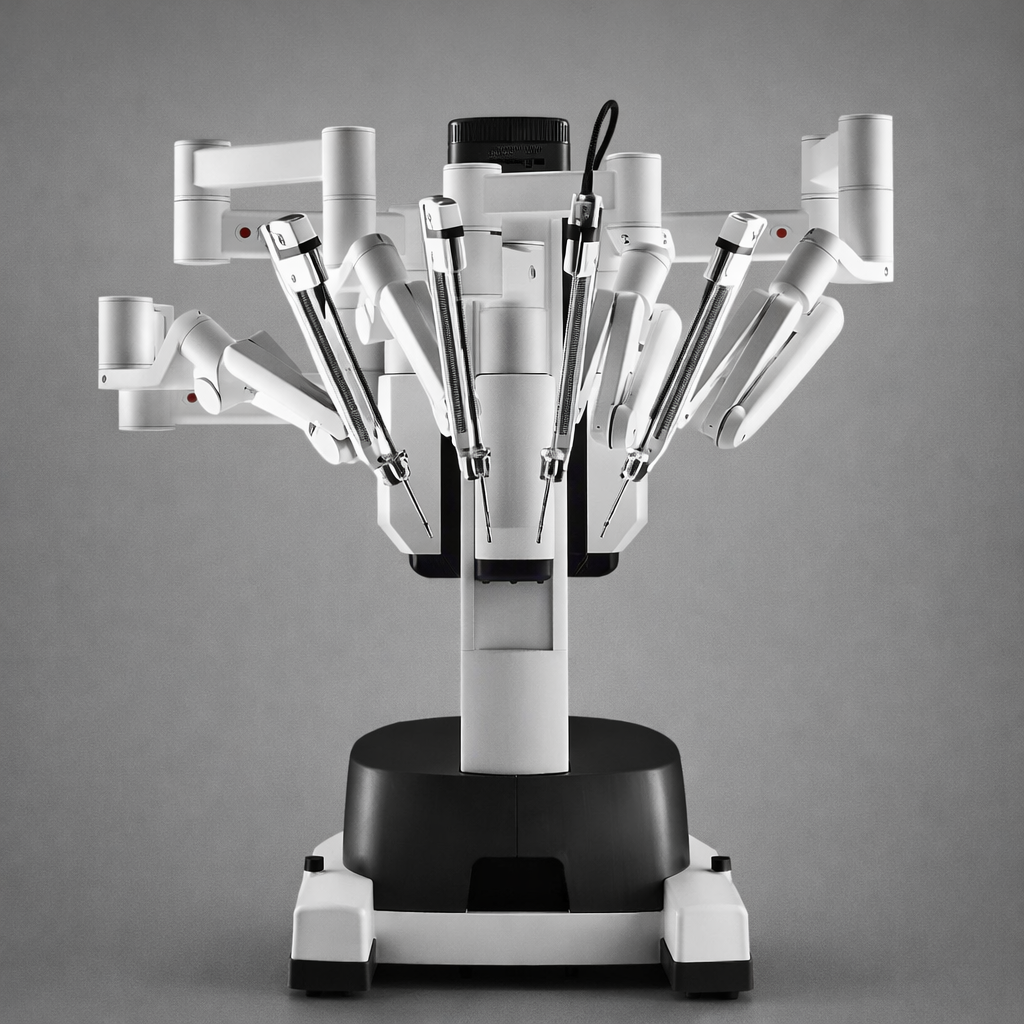
3. Laparoscopic surgery or robotic laparoscopic surgery
Although the mass is benign, surgery is chosen when it is large, has a possibility of being borderline, or causes pain.
Advantages of laparoscopic/robotic surgery
- Small incision, fast recovery
- Minimizes damage to normal ovarian tissue
- Allows precise and accurate surgery
- Definitive diagnosis possible through tissue biopsy
✨ ChoiSang Obstetrics & Gynecology Clinic website https://www.cho1sang.com
If a malignant or borderline tumor is suspected
Surgery is absolutely required
If MRI and tumor marker tests indicate a possibility of malignancy,
The ovary and surrounding tissues must be surgically removed, and a definitive diagnosis must be made through tissue examination.
If necessary, lymph nodes or even parts of the intestine may also be removed.
At this stage, the judgment of a specialist in obstetrics, gynecology, or gynecologic oncology is extremely important,
Director Choi Dong-seok emphasizes, “Don’t worry too much from the beginning; what matters most is determining the treatment direction through an accurate diagnosis.”
🔸 Reasons you don’t need to worry too much about having an ovarian cyst
- Mostly benign
- Functional cysts can resolve naturally
- Detailed examinations can determine the nature of the cyst with high accuracy
- Various treatment options available
- Ovarian preservation is possible even for women of reproductive age

Many women visit the hospital in a panic due to the fear that an ovarian cyst might be cancer,
In reality, if you calmly follow the steps of accurate diagnosis → appropriate treatment selection,
It is a condition that can be managed in most cases without major problems.
🌿 Just hearing the word “ovarian cyst” can make your heart feel heavy, and it is completely natural to feel overwhelmed about what choices to make next.
However, ovarian cysts are mostly benign, and if their nature is accurately identified through detailed examinations and treatment is carried out step by step according to the results, they can be managed very well. What matters most is not struggling alone in anxiety, but choosing the path that suits you best based on accurate information together with a specialist.
Director Choi Dong-seok of Choi Sang Obstetrics & Gynecology always does his best to ease patients’ concerns and to guide them toward the safest and most reasonable treatment options.
If a mass has been found, try not to be too afraid, and proceed calmly through the steps of diagnosis and treatment one at a time.
•••••••••••••••••••••••••••••••••••
🔍 FAQ – Frequently Asked Questions About Ovarian Cysts
1. Can an ovarian cyst turn into cancer over time?
Generally, no. An ovarian cyst is determined to be benign or malignant from the moment it forms, and it is very rare for a benign cyst to turn malignant.
2. Do I need to have surgery immediately if an ovarian cyst is found?
No. In most cases, you can choose among various options such as observation after detailed examinations, sclerotherapy, or laparoscopic surgery.
3. Do functional cysts really disappear on their own?
Yes. Functional cysts that form during the ovulation process often disappear naturally within a few weeks to a few months.
4. Is sclerotherapy safe?
When performed for the appropriate indications, it is safe and can preserve normal ovarian tissue, making it especially beneficial for women of reproductive age.
5. What treatment is done if there is a possibility of malignancy?
The ovary and surrounding tissues are removed through surgery, and a tissue examination is performed. Additional treatment is then determined based on the results.
✨ Choi Sang Obstetrics & Gynecology YouTube http://www.youtube.com/@choisangtv
Discover more from Korea Doctor Interview
Subscribe to get the latest posts sent to your email.