Why Aging Around the Eyes Appears Early and the Most Effective Surgical Solutions

I interviewed Dr. Kim Hyun‑cheol of Kidari Plastic Surgery, who specializes in facelift procedures. Kidari Plastic Surgery treats patients ranging from their late 30s to their 80s, and according to Dr. Kim, many of them come with concerns about aging around the eyes. Sagging eyelids, fine wrinkles, and hollowing under the eyes can significantly change one’s facial impression, so it is one of the areas patients most frequently inquire about and wish to improve.
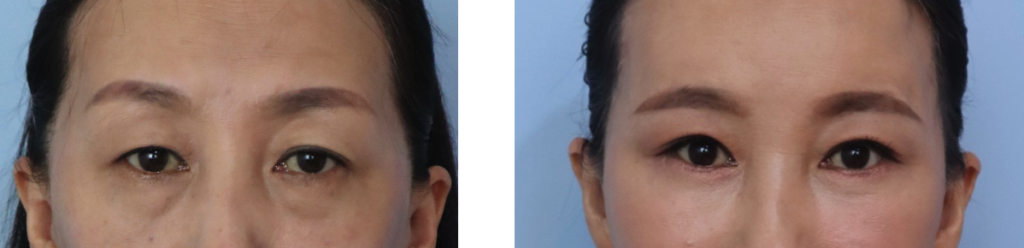
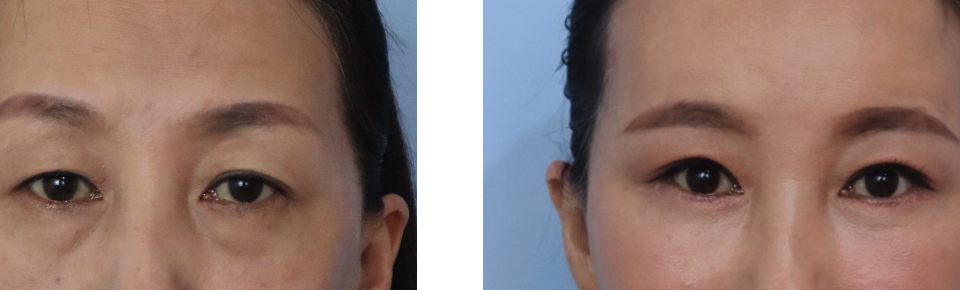
The first area of the face to show signs of aging is the region around the eyes. There are many ways to address this, but many patients wonder which procedure will suit them best and provide the most satisfying results. Dark circles, wrinkles, and hollowing commonly appear under the eyes. In this article, I will explain the simplest and most effective surgical methods to improve these under‑eye aging concerns in an easy‑to‑understand way.
Dark circles refer to the darkened area that appears along the tear trough under the eyes. The causes vary: when there is significant melanin pigmentation beneath the skin, the area becomes darker. Even if melanin is minimal, wrinkles can create shadows that make the under‑eye area look darker. When the skin is thin, the underlying capillaries become more visible. These capillaries contain venous blood, and the muscles beneath also have a darker tone, which makes the area appear bluish. This is why dark circles form easily — the skin under the eyes is the thinnest on the entire face.
The bluish discoloration under the eyes occurs when venous blood pools due to fatigue and reduced skin elasticity, causing congestion and making the area appear darker. When melanin accumulates in the skin, we can suppress its production by consuming vitamin C or prevent darkening caused by skin damage by applying sunscreen.
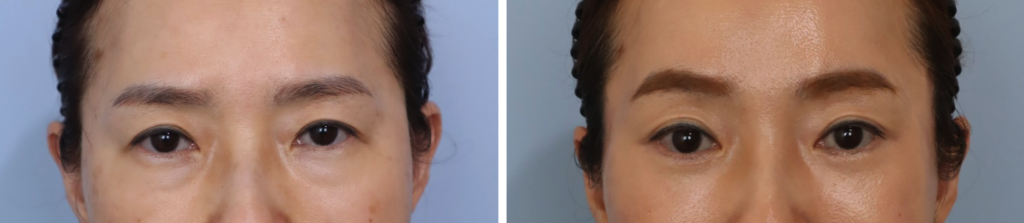
In the clinic, treatments such as laser toning can be performed. Human platelets contain many growth factors, and when these are extracted and centrifuged, injecting them can help brighten the skin tone. PDRN, which is derived from salmon DNA, also helps lighten the skin when injected. Tranexamic acid is another ingredient that can brighten the skin. For cases where thin skin makes the veins visible, procedures like skin Botox can reduce the appearance of venous blood, providing noticeable improvement. If venous congestion is caused by fatigue or sleep disturbances, getting sufficient sleep can help resolve it to some extent. Smoking is also very harmful. Taking supplements that improve peripheral circulation, such as omega‑3, can help improve skin tone.
When the fat under the eyes bulges and the tear trough becomes deeper with aging, the area looks dark and shadowed. In such cases, procedures like lower blepharoplasty, under‑eye fat repositioning, injecting a small amount of filler into the tear trough, or performing fat grafting to fill the hollow area can be effective. These are common surgical methods for improving under‑eye aging. When facial aging progresses further and the Indian folds, nasolabial folds, and midface all begin to sag, addressing these issues together is collectively referred to as lower blepharoplasty. Lower blepharoplasty is divided into two categories depending on the incision method. The first is the transconjunctival approach, where an incision is made inside the lower eyelid, the bulging fat is released and repositioned, and only the inner mucosa is sutured, leaving no visible scar on the outside. This method is used when there is only mild under‑eye fat protrusion. The second method is the subciliary incision, where an incision is made just below the eyelashes along the lower eyelid skin.
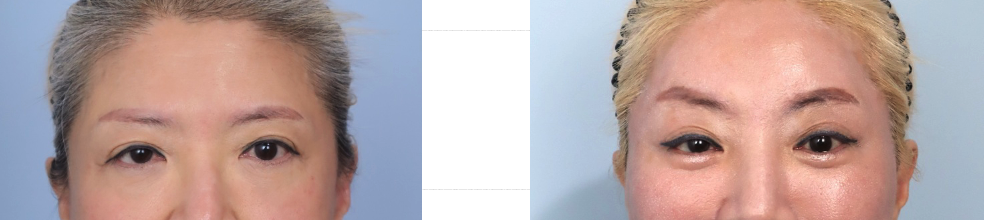
So, are there any side effects of lower blepharoplasty? This is something many patients wonder about before surgery. Among the possible side effects, the most common—though somewhat subtle—is that wrinkles may not be fully removed. When the skin is lifted and trimmed after undermining the lower eyelid, a small amount of wrinkle must intentionally be left behind for a normal and safe result. After the skin is incised and lifted, it naturally contracts as it heals. If the skin is removed too precisely or too tightly, the contraction during healing can increase the risk of the lower eyelid turning outward. Also, when the skin contracts, the muscle that creates the “aegyo-sal” fold can be flattened, making it difficult for the natural under‑eye crease to form. Therefore, leaving an appropriate amount of skin and wrinkles, almost like leaving room for wrapping, is the safest approach.

(Source / Kidari Plastic Surgery YouTube Channel)
This may not be considered a true complication, but if fine wrinkles remain after surgery, some patients may feel dissatisfied. In such cases, Fraxel laser can be used to resurface the skin and smooth out the remaining wrinkles, making it easier to tighten the area. However, if too much skin is removed and not enough is left behind, the lower eyelid can flip outward or the aegyo‑sal crease can become flattened, which not only looks unnatural but can also cause symptoms such as eye irritation, dryness, and excessive tearing. In severe cases, even light exposure can make the eyes feel irritated and watery. This condition is known as lower eyelid ectropion.
Another possible issue after lower blepharoplasty is that the outer corner of the eye may tilt upward, causing a change in facial expression. This can occur during surgery, which is why the safer approach is to lift the lower eyelid broadly from underneath, leave enough tissue, and remove only an appropriate amount of wrinkles without altering the natural eye shape. Another concern is scarring. Since an incision is made, some degree of scar formation is naturally possible.
Since the scar forms along the lower incision line, it usually isn’t very noticeable, but if it does become visible, it can be treated with laser resurfacing. In plastic surgery, it is impossible to guarantee a procedure with zero complications. The best approach is to operate carefully to minimize the risk of complications as much as possible. I have explained the available methods for improving dark circles and aging around the eyes.
Thank you.