Can You Bring Post-Surgery Medication from Korea into Japan? The 1-Month Rule and Sleeping Pill Warnings

After surgery in Korea, the clinic usually sends you home with a bag of medication, often a few days' worth of antibiotics, painkillers and something for the swelling. If you're flying back to Japan, the question tends to pop up on the way to the airport: "Can I just take these with me?"
I wondered about this too, so I went through the personal import guidance from Japan's Ministry of Health and the regional health bureaus myself. The short answer: the usual post-surgery prescriptions can almost always come with you. There are, however, a few rules about quantity and drug type worth knowing in advance.
The short answer: prescription drugs are fine with just a customs check if it's a 1-month supply or less
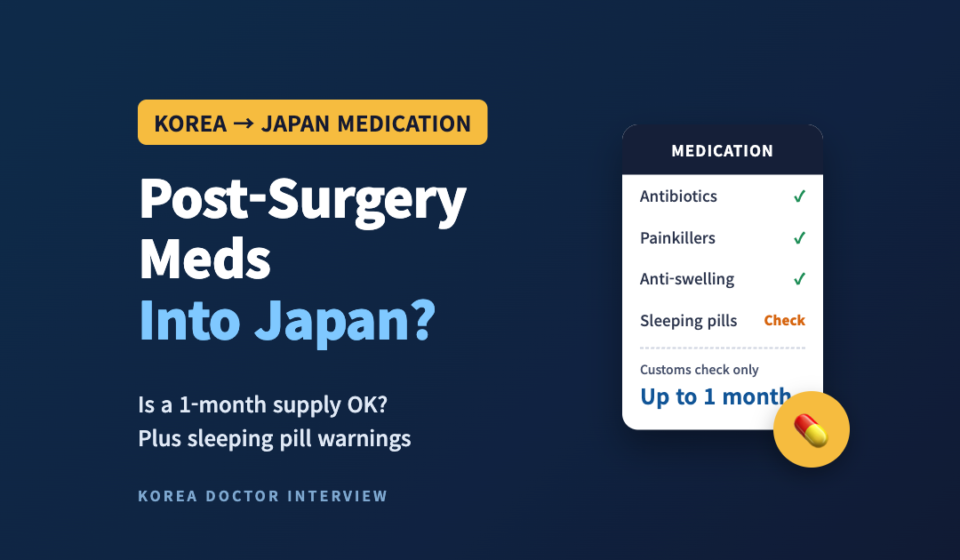
According to Japan's Ministry of Health, medicines that need a doctor's prescription can be brought in with just a customs check, no extra paperwork, as long as the amount, based on the dosage, is a 1-month supply or less. Non-prescription medicines are allowed up to a 2-month supply, and topical products such as ointments and eye drops up to 24 standard-size units per item.
Post-surgery prescriptions usually cover a few days, two weeks at most, so you're very unlikely to go over the limit. Anything beyond a month needs a separate import confirmation, and the guidance notes that excess amounts may be discarded at customs.
Medications Korean clinics commonly prescribe after surgery
It varies by clinic and procedure, but after eyelid, nose, facial contouring or liposuction surgery you'll usually get an antibiotic to prevent infection, an anti-inflammatory painkiller and something to help with swelling. A stomach medicine is often included because the pills can irritate your stomach, and some clinics also give you an ointment for the incisions.
Nearly all of these fall within the 1-month rule above. From what I found, what can cause trouble isn't the amount but the type of drug is.
Sleeping pills and strong painkillers need a separate check
Some clinics add a sleeping pill or a sedative in case you struggle to sleep after surgery. In Japan these can be classed as psychotropic drugs, and psychotropics need advance paperwork if you bring more than a month's worth or the total exceeds the set limit. A few days' supply after surgery is usually within the limit, but it's safer to know exactly what the medicine is.
Opioid painkillers, which may be given after a particularly painful operation, are stricter still. Drugs classed as medical narcotics in Japan need prior permission from the Director of a Regional Bureau of Health and Welfare, regardless of amount. If you're not sure what's in your painkiller, ask the clinic before you leave Korea.
What to ask your clinic for before you fly home
Japan's Ministry of Health recommends carrying a document that explains what medicine you take and why. So if it were me, I'd ask for the following at discharge or at my last check-up:
- A list in English of each medicine's name, active ingredient and daily dose (an English prescription record or medication guide)
- A short note in English confirming which surgery you had
- If there's a sleeping pill or painkiller, its exact generic name
Keep the medicine in the bag or packaging it came in. Loose pills in a separate case are much harder to explain. And anything you need to take during the flight belongs in your carry-on, not your checked luggage.
Good to know once you're back in Japan
The Japanese Embassy in Seoul's medical guide notes that Korean medicines are often higher-dose than Japanese prescriptions, so watch for side effects. If you get an upset stomach or a rash back home, don't just keep taking the leftovers: contact the clinic that operated on you first and see a local doctor. An English medication list makes it much easier to explain to a Japanese doctor.
Running out of your Korean medicine doesn't mean you can pick up the same thing in Japan. Even with the same ingredient, the brand name and strength can differ, so if you need more, you'll need a new prescription from a Japanese doctor.
Frequently Asked Questions
Q. Can I bring my medicine without the original prescription?
From the guidance I found, prescription drugs up to a 1-month supply can come in with just a customs check. It's still a good idea to bring the medicine bag and an English list so you can explain what the medicine is.
Q. What about ointments or scar creams I bought at a Korean pharmacy?
Non-prescription topical products are allowed up to 24 standard-size units per item, so buying enough for your recovery is almost never a problem.
Q. Should I finish the remaining antibiotics in Japan?
Antibiotics are normally taken for the full course, but follow your surgeon's instructions on how long. If you notice anything unusual, talk to a doctor before you keep taking them.
Wrapping up
To sum up: the usual post-surgery prescriptions from Korea, like antibiotics, painkillers and anti-swelling medicine, are generally no problem to bring into Japan if they're a 1-month supply or less. What you do need to watch for is whether they include drugs Japan controls separately, such as sleeping pills or strong painkillers. Get one English medication list before you leave, and you'll feel much more at ease at the airport and with a doctor back home.
※ This article is general information based on public guidance from Japan's Ministry of Health, Labour and Welfare and the Regional Bureaus of Health and Welfare as of November 2026. Rules can change, so check the latest guidance with the ministry, your regional bureau or customs before you travel. Always talk to your doctor before taking or stopping any medication.
Medical Information Notice
This article provides general information based on interviews with medical professionals and publicly available sources, and it does not replace personal diagnosis or treatment. Symptoms and treatment results vary from person to person, so always consult a specialist in person before deciding on any procedure or treatment.
Discover more from Korea Doctor Interview
Subscribe to get the latest posts sent to your email.