Paying for Plastic Surgery in Korea: Card, Cash or Yen? Japanese Card Fees and Why to Pay in Won

Once you've decided on surgery or a skin treatment in Korea, how you pay matters almost as much as the quote. With several million won on the line, whether you use a card, change cash, or tap the "pay in yen" option on the card terminal can noticeably change what you end up paying.
I found this confusing myself, so I went through Japanese card issuers' foreign fee information and related reporting and put it together. It's written for people coming from Japan for treatment in Korea.
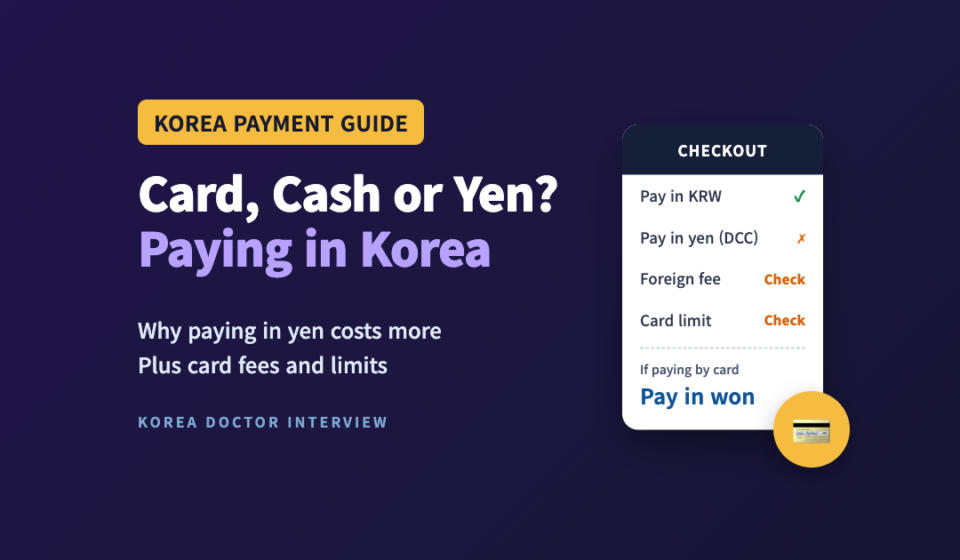
Bottom line: if you pay by card, pay in won (KRW)
When you pay with a foreign card at a Korean clinic, the terminal or the staff may ask "Won or yen?" Choosing yen shows you the amount in yen right away, which feels convenient, but it's DCC (dynamic currency conversion), so the merchant's exchange rate applies and it often costs more. Consumer guides in Japan also recommend paying in the local currency abroad.
So if you're paying by card, pay in won (KRW)— that's the rule of thumb. If your receipt shows an amount in yen, DCC was applied, so before signing, ask them to run it again in won.
Japanese cards' foreign transaction fees have gone up more than you'd think
Even if you pay in won, Japanese card issuers add a foreign transaction fee. It used to be around 2% for many cards, but major issuers have raised it recently. According to Japanese business media (2026), Sumitomo Mitsui Card and Rakuten Card are now at 3.63%, Saison and Mitsubishi UFJ NICOS at 3.85%, while some cards such as JCB Card W stay around 1.6%. Rates change often, so check your card's latest rate before you pay.
On a ¥500,000 surgery bill, a 2% difference in the fee alone is ¥10,000. If you plan to put a large amount on a card, check your card's foreign fee before you leave. Simply using a lower-fee card can save you a fair bit.
Check your card limit in advance, too
One thing I felt people often overlook while researching this is the card limit. Cosmetic surgery often runs to hundreds of thousands of yen in one go, and your usual limit may not cover it. Some Japanese card issuers will temporarily raise your limit ahead of travel or a big purchase, so ask yours before you fly and you won't be caught out at the clinic desk. A sudden large charge abroad can also be flagged as fraud and blocked, so telling your issuer your travel dates and the expected amount helps too.
Is paying in cash cheaper?
During consultations at Korean clinics, you may be quoted different amounts for card and cash. If there's a difference, first check how big it is and what each amount includes.
If it were me, I'd ask at the consultation: "Is the price different for card and cash? If so, what does each include?" And even if you pay in cash, always get a receipt. If revision surgery or a refund ever comes up, having a payment record makes the conversation much easier.
If you use cash, where should you change money?
If you plan to pay in cash, compare rates at a few exchange counters before changing a large sum in one place. Even on the same day, the rate you get can differ depending on where you exchange. Carrying a lot of cash is stressful in itself, so changing only what you need close to your treatment day is easier on the nerves.
How do you pay the deposit?
Some clinics ask overseas patients for a deposit in advance, often by international transfer or a card payment link. Transfers come with their own fees, and whether you get the deposit back if you change dates or cancel varies by clinic. Get the refund terms in writing, by message or email, before you pay so you can check them later.
What else to check on the quote
Korea's VAT refund (tax refund) for cosmetic surgery and skin treatments ended on December 31, 2025. So from 2026, whether the quote includes 10% VAT matters more than before. It's also worth confirming before you pay whether anesthesia, tests, post-op medication and follow-up visits are included, so you don't get hit with unexpected extra charges.
Frequently Asked Questions
Q. Can I use a Japanese card at Korean clinics?
Many clinics that treat international patients accept foreign cards such as Visa and Mastercard. Some don't accept every card brand, though, so check at your consultation and bring at least two cards to be safe.
Q. I already paid in yen. Can I change it?
If you haven't signed yet, you can ask them to cancel and run it again in won. If the payment has already gone through, ask the clinic whether they can cancel and re-charge it.
Q. Which is better, card or cash?
A card costs you the foreign fee, but leaves a payment record and saves you carrying large sums. Cash has no card fee but comes with exchange costs and the worry of carrying it. In the end, the most accurate way to decide is to compare your card's foreign fee with the exchange rate you can get.
Wrapping up
When paying for treatment in Korea, paying in won if you use a card, and checking your card's foreign fee and limit before you leave, can save you a fair amount of money and time. If you're quoted a cash price, ask why it differs and whether you'll get a receipt, and always confirm the quote includes VAT and post-op costs.
※ This article is general information based on card issuers' public information and media reports as of November 2026. Card fees, limits and each clinic's payment terms can change, so check directly with your card issuer and the clinic before paying.
Medical Information Notice
This article provides general information based on interviews with medical professionals and publicly available sources, and it does not replace personal diagnosis or treatment. Symptoms and treatment results vary from person to person, so always consult a specialist in person before deciding on any procedure or treatment.
Discover more from Korea Doctor Interview
Subscribe to get the latest posts sent to your email.