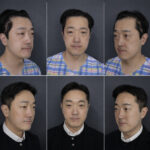


Today, I interviewed Dr. Hwang Kyuseok from Homme & Femme Plastic Surgery. As the founder of the Rhinoplasty Research Institute, he has dedicated himself to training younger surgeons and has pioneered new approaches in rhinoplasty for many years.
Me: Dr. Hwang, thank you for gladly agreeing to this interview. Dr. Hwang: I should be the one thanking you. Please take good care of me today. Me: I’m curious about Homme & Femme’s implant‑free rhinoplasty. Dr. Hwang: Simply put, the nose can be made beautiful using only our natural tissues. But in Korea, it is still common to insert implants to shape the nose. Many people with wide nostrils, bulbous tips, or large noses try to reduce their nose size by inserting implants.


Recently, a patient came for a consultation. I told her, “It’s possible without implants.” But she eventually had surgery elsewhere, only to return to us for revision surgery.
For nostril reduction, large nose correction, and Asian‑type low bulbous noses, the belief 20 years ago was that “rhinoplasty is impossible without implants.” I began promoting implant‑free rhinoplasty back in 2002.

The early days of implant‑free rhinoplasty I kept saying, “Please don’t insert implants. You don’t need them. You can raise the nose without them.” But at that time, most people responded, “What are you talking about?” “That’s impossible.” It was a lonely journey. But after 20 years, people are finally beginning to understand. Even though it was frustrating, I continued presenting at conferences and sharing my findings.
Below is a photo from the 2013 San Diego Plastic Surgery Conference, where I became the first in the world to present a method for correcting the most difficult type of nose — the low, large Asian nose.

Establishing the technique By 2026, as the technique spread, it finally gained recognition. Now, implant‑free rhinoplasty is widely known, and the representative technique is our Diamond Tip Correction Method. Natural‑looking nose tips are trending these days, and our technique has become loved by many patients.
Me: Listening to you, time flew by. Thank you for sharing your valuable insights.
Dr. Hwang: Thank you as well. I look forward to continuing this work.
This interview reflects Dr. Hwang’s philosophy and the depth of his 20‑year journey. His belief that “natural beauty is the most beautiful” is shaping a new standard in rhinoplasty.