Long Chin Surgery, Not Just a Contour Operation: Structure, Complexity, and Patient Transformation

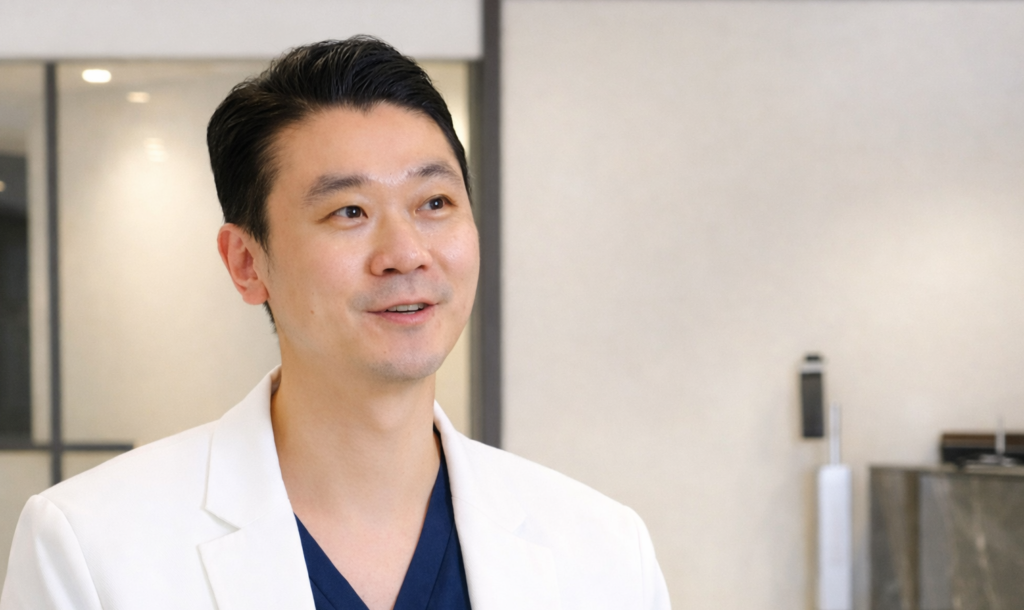
⭐ Interview with Dr. Seo Beom-shin, Director of MadeYoung, Who Has Deeply Researched Long Chin Surgery
Although Dr. Seo Beom‑shin, the director of MadeYoung Plastic Surgery, has performed a wide range of facial contouring surgeries,
Among them, he is especially known as a surgeon with unparalleled expertise in long chin surgery.
Even though long chin surgery is far more complex and demanding than general facial contouring procedures,
Over many years, Dr. Seo has delved deeply into this field and has helped countless patients resolve their concerns.
Long chin surgery is not merely a procedure that changes appearance; it is a surgery that can change the direction of a patient’s life.

⭐ Why Long Chin Surgery Is Special — It’s More Than a Simple Bone Cut
On the surface, it may look like a simple procedure that slightly reduces the chin bone, but
Long chin surgery requires far more complex calculations and highly precise judgment. It must take the following factors into consideration simultaneously.
- Vertical length of the chin
- Horizontal width of the chin
- Degree of protrusion
- Overall facial proportions
- Presence of asymmetry
- Difference in bilateral protrusion
- Depth in the side profile
- Thickness and elasticity of the soft tissue
- Sagging that may occur after length reduction
- Prevention of witch‑chin deformity
- Method of soft‑tissue suturing
- Secondary soft‑tissue surgery when necessary
In other words, long chin surgery is not simply cutting the bone; it is a highly complex procedure that must consider the bone, soft tissue, proportions, and overall balance.

⭐ Why Long Chin Surgery Is Challenging — The Complexity of Anatomical Structures
Long chin surgery is highly challenging because the anatomical structures involved are complex.
Anatomical factors that must be considered in long chin surgery
- Location of the mental nerve
- Course of the inferior alveolar nerve
- Attachment site of the mentalis muscle
- Thickness and elasticity of the soft tissue
- Amount of the chin fat pad
- Possibility of soft‑tissue sagging
- Length and shape of the chin skeleton
In many long‑chin patients, the nerve extends downward more than usual, which increases the risk of nerve injury during osteotomy.
If an inexperienced surgeon attempts to shorten the chin using the conventional V‑line method, it can lead to nerve injury, followed by chronic pain and abnormal sensations.

🔧 Long‑chin surgery process — stages requiring precision
- Precision analysis based on 3D CT
- Osteotomy design and soft‑tissue planning
- Performing a vertical osteotomy while avoiding the nerve
- Soft‑tissue suspension suturing to prevent sagging
- Soft‑tissue repositioning to prevent witch‑chin deformity
- Fixation and asymmetry correction
This process requires a completely different approach from conventional V‑line surgery and is far more delicate and time‑consuming.
💔 Deep complexes experienced by long‑chin patients
Long‑chin patients experience significant difficulties not only in appearance but also psychologically.
- The chin looks long in photos
- The teeth become excessively exposed when smiling
- The side profile looks unusually long
- Fear of taking off the mask
- The facial expression looks stiff
- The smile looks awkward
- Difficulty smiling in front of others
- The chin appears longer with age
Especially after their 30s, many patients say they have “forgotten how to smile.”

🌿 Recovery after long‑chin surgery — changes that occur over time
🟢 Week 1
- Swelling is at its worst
- Bruising may occur
- Limited mouth opening
🟡 Weeks 2–4
- Swelling decreases rapidly
- Facial expressions become more natural
- Able to return to daily activities
🔵 Months 1–3
- Soft tissues begin to settle
- Chin contour stabilizes
🟣 After 6 months
- Final line is completed
- Maximized smile and facial expression changes
🔍 Long-chin surgery vs. V-line surgery — fundamental differences from anatomical and functional perspectives
Although both long‑chin surgery and V‑line surgery address the mandibular contour,
The two surgeries differ in purpose, anatomical approach, osteotomy direction, soft‑tissue response, nerve risk, and postoperative changes
They proceed based on completely different principles.
① Fundamental differences in surgical purpose.
- Long‑chin surgery: a procedure that corrects vertical excess of the face
- V‑line surgery: a procedure that reduces the transverse width of the face to refine its contour
② Differences in osteotomy direction and surgical approach
- Long‑chin surgery: a vertical osteotomy performed to reduce the vertical length
- V‑line surgery: a horizontal or curved osteotomy performed to reduce facial width
③ Differences in anatomical complexity and risk level
- Long‑chin surgery: high difficulty because nerves and soft tissues are close to the osteotomy site
- V‑line surgery: relatively lower risk because the osteotomy can avoid the nerve
④ Differences in soft‑tissue response and postoperative management
- Long‑chin surgery: requires advanced suturing to prevent soft‑tissue sagging and witch‑chin deformity
- V‑line surgery: lower management difficulty because it does not create significant soft‑tissue redundancy
⑤ Differences in functional and aesthetic changes after surgery
- Long‑chin surgery: accompanied by functional improvements such as better facial expression, smiling, and tooth exposure
- V‑line surgery: primarily an aesthetic change focused on contour improvement
⑥ Differences in the patient groups to which each surgery applies
- Long‑chin surgery: for patients with skeletal long chin, excessive tooth exposure, or a chin that appears long when smiling
- V‑line surgery: for patients seeking cosmetic improvement of facial shape
⑦ Differences in surgical difficulty relative to the outcomes
- Long‑chin surgery: although highly complex, it offers significant psychological and functional improvements, leading to high satisfaction
- V‑line surgery: moderate difficulty, mainly focused on contour improvement
❤️ For those considering long‑chin surgery
Long‑chin surgery is difficult and complex, but it can greatly improve quality of life.
Dr. Seo Beom‑shin understands more deeply than anyone the stress and complex that long‑chin patients experience,
He continues performing long‑chin surgery to help patients reach a brighter moment in their lives.
Made Young Plastic Surgery Clinic Website https://www.made-young.com
🟩 FAQ
❓ How complex is long‑chin surgery
It is a highly complex surgery that requires simultaneous consideration of bone cutting, soft tissues, nerves, and facial proportions.
❓ Will facial expressions look natural after long‑chin surgery
Yes. Many patients say their smile becomes more natural and their facial expressions look brighter.
❓ Is revision surgery common after long‑chin surgery
When an inexperienced surgeon reduces the chin length using outdated methods, nerve damage and other issues often lead to revision surgery.
❓ Who needs long‑chin surgery
It is suitable for those whose chin looks long, who show too much teeth when smiling, or whose chin appears prominent in photos.
❓ How long is the recovery period for long‑chin surgery
Initial recovery takes about 2–3 weeks, and soft‑tissue stabilization may take several months.

Discover more from Korea Doctor Interview
Subscribe to get the latest posts sent to your email.