Neck Lift Surgery Complete Guide | Side Effects · Benefits · Procedure · Revision Surgery

Neck Lift Surgery Complete Guide | Side Effects · Benefits · Procedure · Revision Surgery
We had an in‑depth discussion with Director Hyuncheol Kim of Kidari Plastic Surgery Clinic about neck lift (cervicoplasty) surgery, addressing many of the questions people commonly have. He explained in detail how concerns such as neck wrinkles, double chin, and thick neck contours can be improved, as well as the principles applied during the surgical procedure.
One of the most frequently asked questions is, “Is neck lift surgery safe?” and “Are there any side effects?” Director Hyuncheol Kim explained that neck lift surgery generally has few complications. He noted that wrinkles may not be removed as much as expected or that a scar behind the ear may be visible, but serious issues are rare. Although nerve damage is theoretically possible, he emphasized that it is extremely uncommon in actual clinical practice because the anatomical structure of the back of the neck is simple, resulting in a low risk of nerve injury.
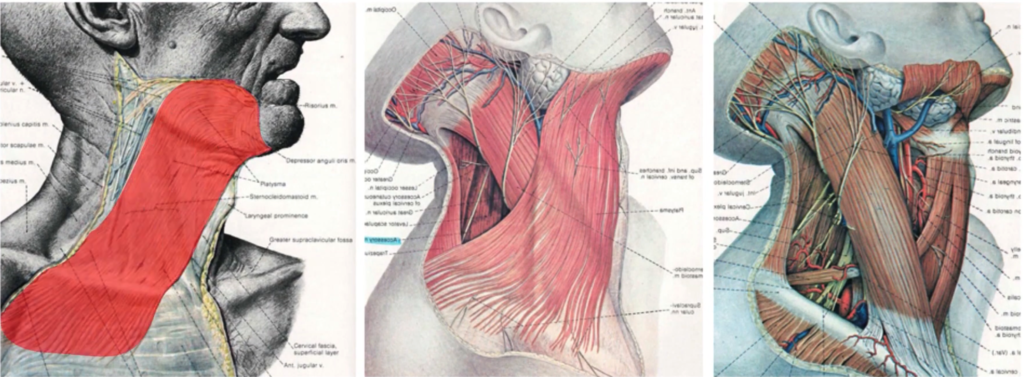
To understand the effectiveness of neck lift surgery, it is essential to know the anatomical structure of the neck. The face contains superficial facial muscles that move closely with the skin, such as the orbicularis oculi, orbicularis oris, frontalis, and platysma. These muscles are attached to the skin and contribute to the formation of fine wrinkles.
In contrast, the deep facial muscles are located closer to the bone, and the fascia layer connecting them is the SMAS layer. The SMAS has greater elasticity than the skin, allowing it to maintain tension when lifted and providing long‑lasting lifting effects.
If only the skin is pulled, scars may widen or the skin may quickly sag again. However, lifting and securing the SMAS layer results in a more natural and longer‑lasting outcome.
In the neck, the platysma muscle extends widely from the corners of the mouth down to the collarbone. When this muscle is tightened and repositioned, the overlying skin naturally becomes smoother. Based on this principle, neck lift surgery is performed in three main methods: posterior neck lift, anterior corset platysmaplasty, and Elasticum thread lifting.

Posterior neck lift involves tightening the platysma from behind the ear, but it is often performed together with facelift or temporal lift procedures to prevent earlobe distortion. Anterior corset platysmaplasty is performed through a 3.5–4 cm incision under the chin, where the separated edges of the platysma are sutured together, resulting in minimal visible scarring. For issues caused by muscle or fat, such as salivary gland bulging or a “turkey neck,” Elasticum thread lifting is effective in pulling the tissues backward.
There are various types of neck wrinkles. Horizontal wrinkles that appear naturally from birth can be improved with liposuction or a neck lift. Double chin or “turkey neck” caused by aging or obesity responds well to a combination of facelift, neck lift, corset platysmaplasty, and Elasticum thread lifting. Vertical band-like wrinkles caused by loosened platysma edges can also be improved with corset platysmaplasty or Elasticum lifting.

In revision surgery, the incision is made along the existing scar, and the SMAS is tightened and secured again, which is not significantly different from the primary procedure. Many people ask whether a facelift alone can improve neck wrinkles, but a facelift pulls the tissues upward, while the neck requires horizontal tightening. Therefore, a facelift alone is not effective for improving neck wrinkles. If neck wrinkle correction is needed, combining it with a neck lift provides the best results.
In younger patients, double chin or “turkey neck” is usually caused by excess fat, and since their skin elasticity is still good, removing the fat alone often leads to noticeable improvement. However, fat located beneath the platysma is difficult to remove with liposuction alone, so making an anterior incision and removing it under direct vision is a more effective approach.
Although many people worry about scarring, the area behind the ear is naturally hidden, and even if a scar forms, it can be removed or improved with injections. Incisions along the hairline can also be refined with laser treatment, so they rarely pose a clinical issue. Ultimately, a neck lift is not simply a procedure that pulls the skin; it is a highly advanced surgery that requires precise understanding and handling of the platysma and the SMAS layer. Complications are minimal, and by combining different techniques, the procedure can be customized to each person’s neck structure and wrinkle type. When the correct principles are applied, the results can be highly effective.
⭐ FNA (Frequently Needed Answers)
- How long is the recovery period?
Most patients can return to daily activities within 1–2 weeks, and swelling and bruising gradually fade over time. - How long do the results of the surgery last?
Because it is a structural procedure that lifts based on the SMAS and platysma, the results generally last for several years or longer. - Are the scars noticeable?
The incision under the chin is barely visible from the front or side, and the incision behind the ear is also well hidden by the hair and ear line, so it is generally not a significant concern. - Can a double chin be corrected with liposuction alone?
In younger patients with good skin elasticity, liposuction alone can improve a double chin, but fat beneath the platysma is difficult to remove with liposuction alone, so combining it with a corset platysmaplasty can be more effective. - Do neck lift surgery and facelift need to be done together?
It’s not always necessary, but a posterior neck lift is often performed together with a facelift to prevent earlobe distortion and create a natural contour. In contrast, a corset platysmaplasty can be performed as a standalone procedure.

Kidari Plastic Surgery YouTube Channel https://youtube.com/channel/UC8n-YGd3wJaahGeESfi8ldA?si=NYY7ZkqyEumcmqJk
Discover more from Korea Doctor Interview
Subscribe to get the latest posts sent to your email.